
Loudoun County Circuit Court Overview
The Circuit Court is the broadest court in Virginia. In Loudoun County, it handles all felony trials, civil claims over $25,000, divorce, real-property disputes, and the proving of wills and estates. It is the only local court that holds jury trials for these matters. Misdemeanors that start in a district court can move up to Circuit Court on appeal for a new trial. The court also reviews some appeals from the district courts and hears certain juvenile cases transferred for felony prosecution.
Loudoun County sits in the 20th Judicial Circuit. A circuit is a group of courts that share the same set of judges and rules. The Circuit Court in Loudoun is the trial court most people mean when they search for the county "court," even though many day-to-day cases are heard in the district courts. The Virginia Judicial System page for the Loudoun Circuit Court lists judges, contact details, and statewide court context. The county's own Circuit Court page covers local rules and jurisdiction.
Courts in the Loudoun County System
Virginia builds its courts at the state level, and Loudoun hosts a local office of each trial court. The Circuit Court is the court of record, but most residents first meet the General District Court for a traffic ticket or a small civil claim. Family and juvenile matters go to a separate court. The table below lists the main court and clerk offices in the county, with the address and phone for each.
The Virginia Judicial System keeps its own page for the Loudoun General District Court, which shows clerk details, judges, and the weekly docket. That page is a good check before any in-person visit.
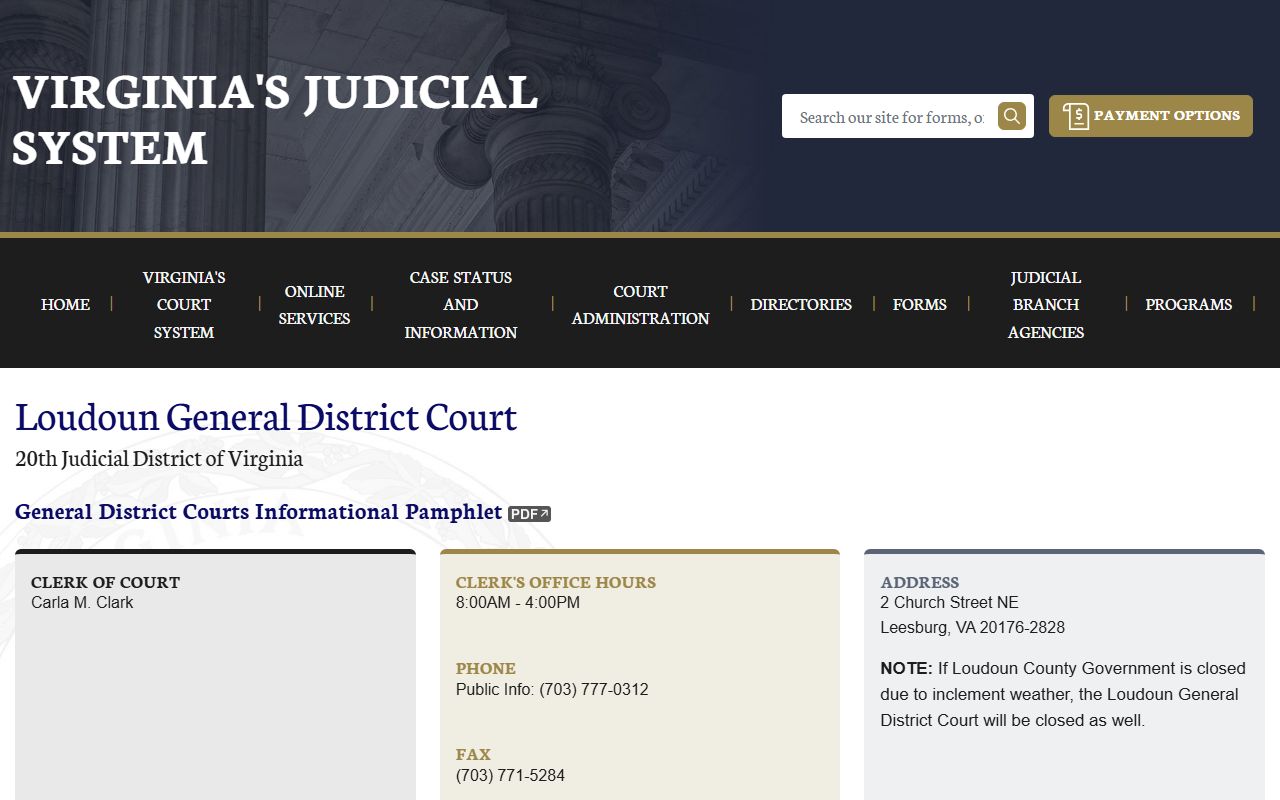
The screenshot shows how the state court site organizes Loudoun's General District Court information, with the same clerk and address details repeated in the table here.
| Court / Office | What It Handles | Address | Phone |
|---|---|---|---|
| Loudoun Circuit Court | Felonies, civil over $25,000, divorce, wills and estates, jury trials | 18 E. Market Street, Leesburg, VA 20176 | 703-777-0270 |
| Clerk of the Circuit Court | Case files, land records, probate, marriage licenses, jury | 18 E. Market Street, Leesburg, VA 20176 | 703-777-0270 |
| General District Court | Traffic, misdemeanors, felony preliminary hearings, civil up to $25,000 | 2 Church Street NE, Leesburg, VA 20176 | 703-777-0312 |
| Juvenile and Domestic Relations District Court | Juvenile offenses, custody, support, abuse and neglect, spouse abuse | 18 E. Market Street, Leesburg, VA 20176 | 703-777-0300 |
| Magistrate's Office | Warrants, summonses, bail, emergency protective orders | 42035 Loudoun Center Place, Leesburg, VA 20175 | 703-777-0405 |
Circuit Court vs. General District Court vs. J&DR Court
The three trial courts in Loudoun split the work by case type and size. The Circuit Court takes the big and serious cases. The General District Court handles high-volume, lower-stakes cases like traffic and small claims. The Juvenile and Domestic Relations District Court, often shortened to J&DR, keeps juvenile and family matters in their own court. The chart sorts the main differences so you can tell where a case belongs.
| Circuit Court | General District Court | J&DR Court | |
|---|---|---|---|
| Civil Limit | Over $25,000; shares $4,500–$25,000 | Up to $25,000 | Support and custody, no dollar cap |
| Criminal Cases | All felonies and appealed misdemeanors | Misdemeanors, felony preliminary hearings, traffic | Juvenile offenses |
| Family Cases | Divorce, adoption | No | Custody, support, abuse and neglect, spouse abuse |
| Jury Trials | Yes | No | No |
One rule helps with most searches. If the case can send someone to prison, end a marriage, or move a lot of money, it is likely in Circuit Court. If it is a ticket, a misdemeanor, or a landlord-tenant dispute, start with the General District Court.
How a Case Moves Through the Loudoun County System
Cases do not always start where they end. A felony usually begins with an arrest, then a magistrate, then a preliminary hearing in the General District Court before it ever reaches Circuit Court. A civil suit filed in Circuit Court moves through its own steps. The two flows below show the common path for each.
Criminal flow: Arrest › Magistrate / Bail › General District Court Preliminary Hearing › Grand Jury Indictment › Circuit Court Arraignment › Trial › Sentencing › Appeal
Civil flow: Complaint Filed › Service on Defendant › Answer › Discovery › Hearing or Trial › Judgment › Appeal
Many district court rulings can be appealed to the Circuit Court for a new trial, called a trial de novo. That is a fresh hearing, not a review of the first one. To follow any of these steps in a real case, check the Loudoun County court dockets by hearing date.
Civil, Family, and Criminal Divisions
The Clerk of the Circuit Court splits its work into divisions, and each one keeps a different set of records. The Civil Division handles civil suits, divorce, name changes, garnishments, and appeals from the district courts. The Criminal Division handles felony case files, criminal payments, bond refunds, and restitution. Both divisions feed the public case-search system, but the actual paper file stays with the clerk.
Family work is split between two courts. Divorce and adoption are Circuit Court matters because they need the court of record. Custody, child support, foster care, and protective orders for family abuse go to the J&DR Court instead. The Virginia Judicial System page for the Loudoun J&DR Court lists its clerk, judges, and schedule.
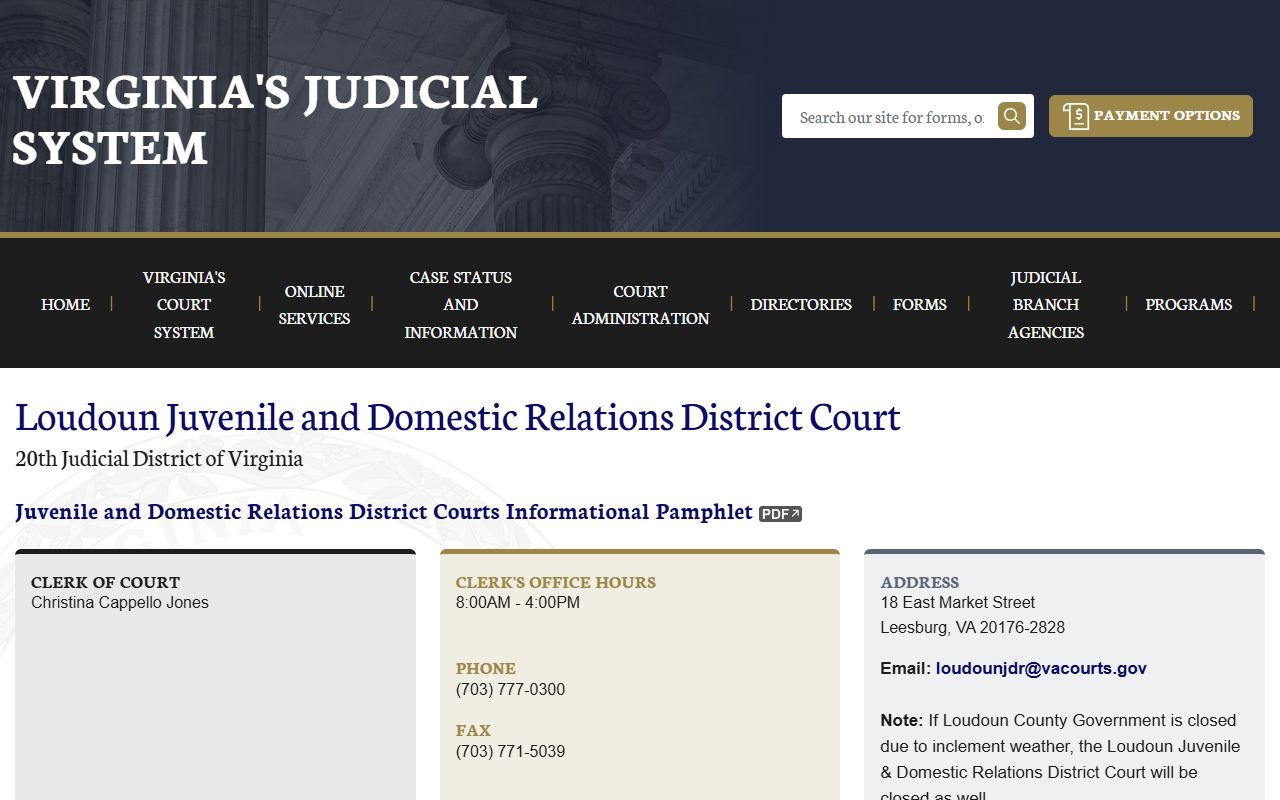
As the page shows, the J&DR Court keeps its own clerk operation, and most of its juvenile files are closed to the public.
Note: Juvenile case files are confidential under state law, so the J&DR clerk may give only court dates and times by phone, and photo ID is needed for anything more.
The 20th Judicial Circuit
Loudoun County is part of the 20th Judicial Circuit and the 20th Judicial District. The circuit covers the Circuit Court level; the district covers the General District and J&DR courts. The same group of judges rotates through the circuit's courts. Loudoun's local rules were updated on April 1, 2024, when the 20th Judicial Circuit replaced its prior Loudoun County rules and procedure orders.
The appeal path depends on the case. A final Circuit Court judgment can go to the Court of Appeals of Virginia where an appeal of right applies, or on to the Supreme Court of Virginia for discretionary review. District court matters, by contrast, are appealed up to the Circuit Court first. This is why a single case can touch more than one court before it ends.
Magistrates and the District Courts
Magistrates are judicial officers, not trial judges. They work at the front end of the system. A magistrate reviews complaints from police, deputies, and citizens, then decides whether there is probable cause. Magistrates may issue arrest warrants, search warrants, summonses, subpoenas, emergency protective orders, emergency custody orders, and temporary detention orders. They also set bail or commit a person to jail and can take prepayment for some traffic and minor offenses.
The Loudoun Magistrate's Office shares a complex with the Adult Detention Center. The county's Magistrate's Office page describes these duties in full.
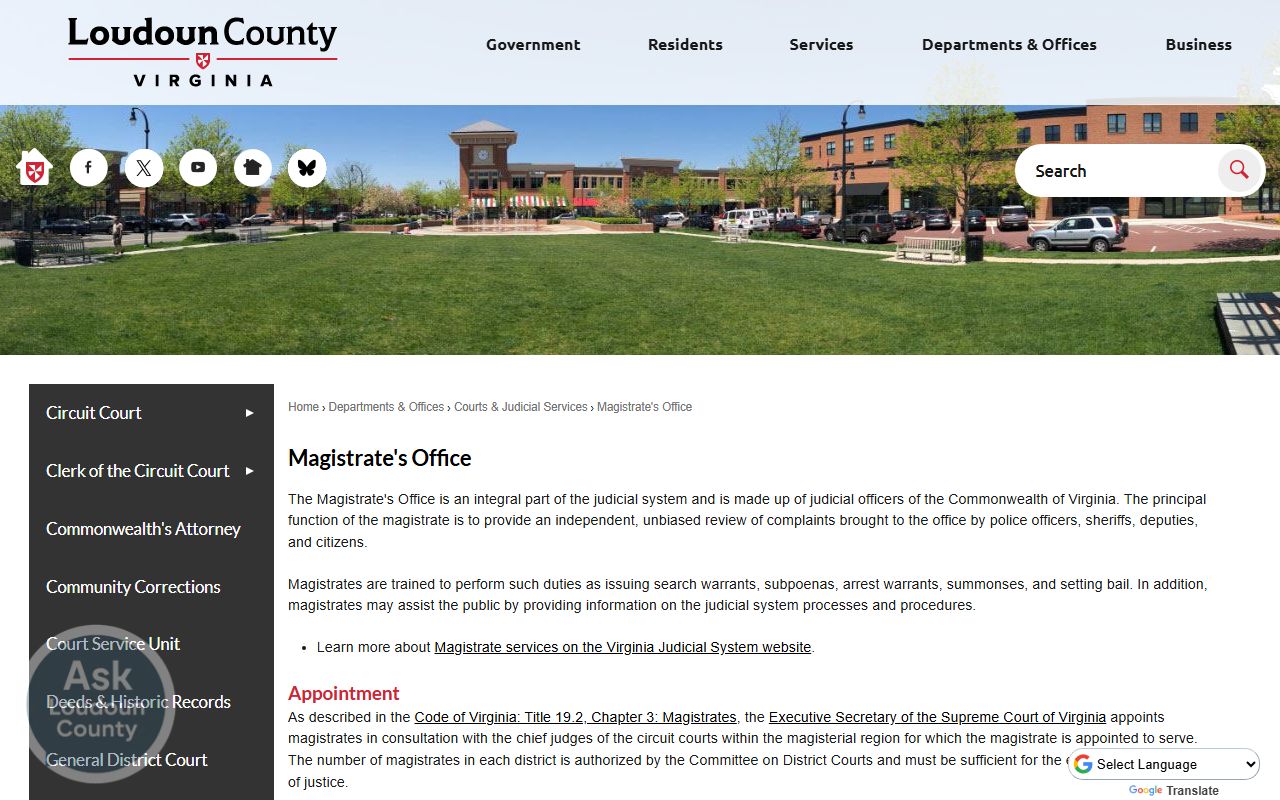
The page confirms the magistrate's role in warrants, bail, and emergency orders, which is the step that often comes before a district or Circuit Court case file even exists.
For day-to-day cases, the General District Court is the busiest court in the county. Its county page describes the traffic, civil, and criminal divisions and how local matters move through the docket.