
How to Search for Loudoun County Warrants
There is no official public active-warrant search for Loudoun County in the sources reviewed. That is common across Virginia. Active warrants are sensitive, and posting them could tip off a person before service. So a warrant search works in an indirect way. You check the court cases tied to a person, you ask the right office, and you avoid unofficial sites that claim to list warrants.
The most useful free tool is the state case system, which can show related criminal or traffic cases. The table lays out where a warrant check can and cannot go.
| Channel | What It Offers | Notes |
|---|---|---|
| Public warrant database | None located | No official Loudoun online warrant list found. |
| Related court case search | Name, case number, hearing date | Use the Virginia case system; may show the case behind a warrant. |
| Magistrate inquiry | Case-specific information | Magistrates cannot give legal advice. |
| Sheriff report or tip | Report a concern | Use the Sheriff's Office official contacts. |
The Virginia Judiciary Online Case Information System is the free place to check for the court case a warrant may belong to.
Types of Warrants in Loudoun County
Not every warrant is for an arrest. The term covers several kinds of court orders, and they do not all work the same way. Knowing the type helps you understand what a warrant means and what to do about it.
- Arrest warrant: issued after a probable-cause review to arrest a person for a crime.
- Bench warrant or capias: issued by a court after a missed court date, a probation violation, or contempt.
- Search warrant: authorizes a search of a place, person, or property for evidence.
- Civil warrant: a General District civil process, not a criminal arrest order.
- Emergency protective order: a judicial emergency order in family or violence cases.
- Temporary detention or emergency custody order: a mental-health emergency process.
A capias and a bench warrant often follow a failure to appear, so they tie directly to a court case you may be able to find in the case system.
Failure to Appear and Capias Warrants
One of the most common reasons a warrant appears is a missed court date. If a person does not show up for a scheduled hearing, the court can issue a capias or bench warrant for the arrest. This can happen in a criminal case and in a traffic case. A missed traffic date can also trigger license consequences from the state, separate from the court warrant itself.
The good news is that these warrants tie to a known case. Because the case already exists in the court system, you can often find it by name or case number and see the next step. If you discover a capias against you, the safest path is to contact the court or an attorney quickly rather than wait. Acting early can sometimes let you get the matter set for a new hearing.
A capias differs from an original arrest warrant. An arrest warrant starts a case after a probable-cause review. A capias is the court ordering custody on a case that is already open. Both put a person at risk of arrest, so neither should be ignored.
How to Check Related Court Cases
Because there is no public warrant list, the practical move is to find the case behind the warrant. A bench warrant for a missed date, for example, will sit on top of an existing criminal or traffic case. Searching that case by name or case number can show the court, the charge, and the next hearing.
If a case appears, call the court that holds it. The General District Court is at 703-777-0312, the Circuit Court Clerk is at 703-777-0270, and the J&DR Court is at 703-777-0300. If custody is involved, the Adult Detention Center is at 703-777-0405. For full case history, the Loudoun County court records page explains how to search and read a case.
How to Resolve an Outstanding Warrant
An outstanding warrant does not go away on its own. Handling it the right way protects you and keeps the process orderly. These steps follow the official guidance for the county.
- Do not rely on unofficial warrant databases.
- Search the Virginia case system for related Loudoun criminal or traffic cases.
- Call the relevant court clerk if a case appears.
- Contact an attorney or the Public Defender before appearing on a criminal warrant.
- Ask counsel or the court where to report, whether bond applies, and if a magistrate appearance will happen.
- Bring government ID and leave prohibited courthouse items at home.
Note: A magistrate cannot give legal advice, so questions about how a warrant affects your case should go to an attorney.
Bond and Surrender Basics
If a warrant leads to custody, bail comes next. A magistrate or judge can set conditions or money to secure a person's appearance. A bond may be secured by a surety, or a person may be released on recognizance with a promise to return. The terms depend on the charge and the person's history.
For a planned surrender, ask counsel or the court where to report and whether a bond hearing will follow. Custody status is verified by phone with the jail, since Loudoun has no public roster. The inmate records page covers how to confirm custody and the booking process.
Federal Warrants and Loudoun County
Some warrants are federal, not state. Federal arrest and search warrants tie to cases prosecuted by the U.S. Attorney for the Eastern District of Virginia, which covers Loudoun. Federal warrants are served by the U.S. Marshals Service, not the county Sheriff. These do not appear in the state case system at all.
The U.S. Attorney for the Eastern District of Virginia handles federal prosecutions from the county.
Federal matters route through the federal courts, so a federal warrant is checked through that system, not the county clerk.
Juvenile Warrant and Law-Enforcement Records
Juvenile records get extra protection, and that includes law-enforcement records connected to warrants. Juvenile law-enforcement records are restricted under Virginia Code § 16.1-301, with only limited disclosures to listed parties and agencies.
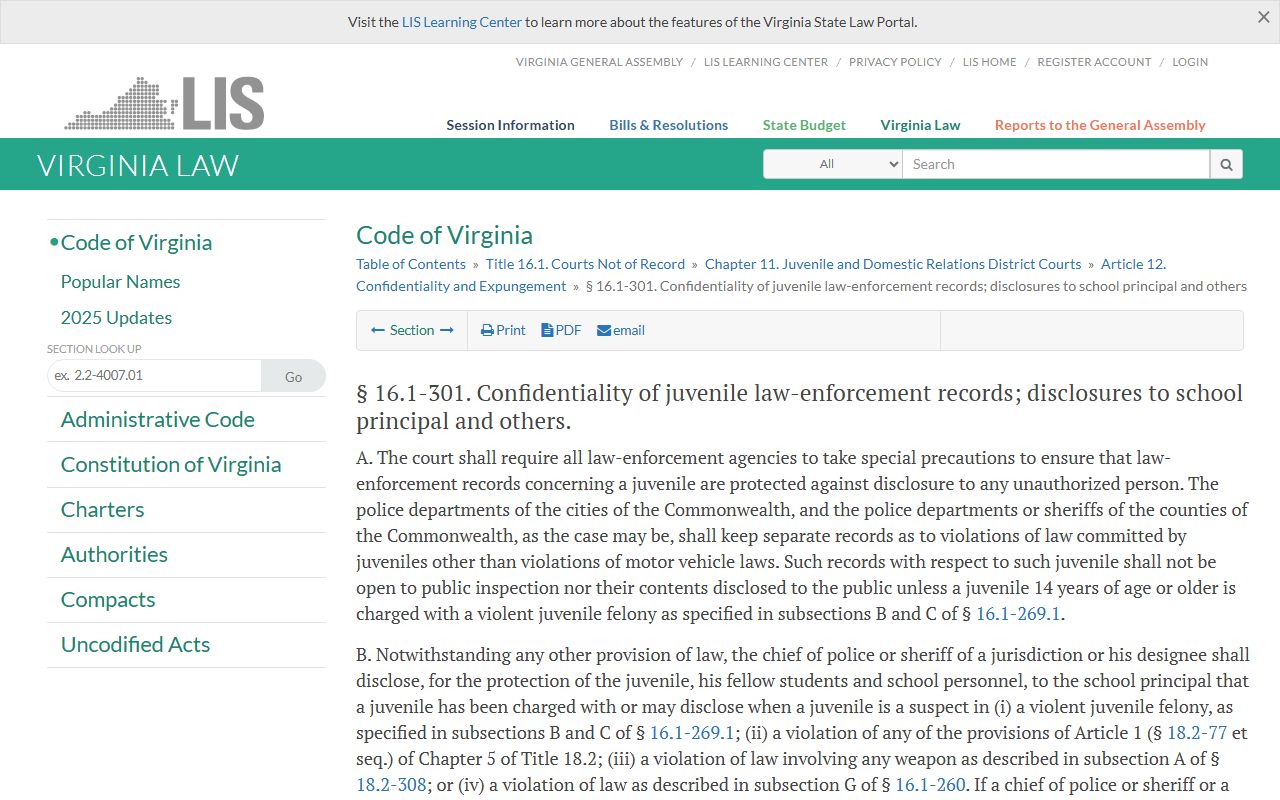
So a warrant tied to a juvenile is not handled or disclosed the way an adult warrant is. Most of the detail stays closed to the public under the statute.