
About the Loudoun Clerk's Office
Gary M. Clemens is listed as the Clerk of the Circuit Court. The Code of Virginia mandates more than 800 duties for the office, which makes it one of the busiest in county government. The Clerk creates and maintains court files, prepares court orders and jury lists, contacts jurors, and issues court process. The office also records deeds, issues marriage licenses, and handles probate of wills and estates.
The office is open to the public without an appointment, except for probate matters. Public kiosks for criminal and civil digital records sit on the fourth floor across from the elevators and inside the Clerk's office on the third floor. The Clerk's About the Office page lists the full range of duties.
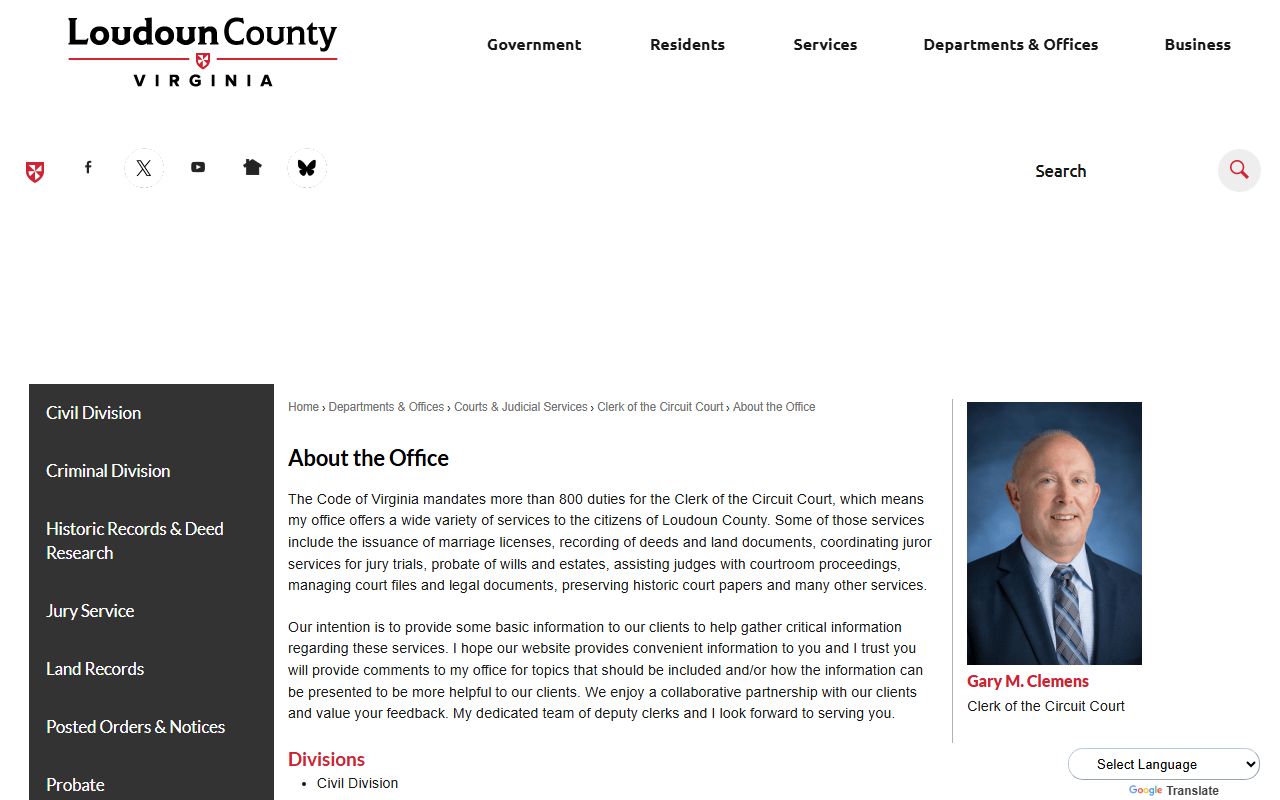
The page describes the Clerk's role as court administrator, recorder of deeds, and probate judge.
Clerk Office Contact and Hours
The Clerk's office is in the Loudoun County Courthouse in Leesburg, with a separate mailing address for general correspondence. The contact card has the details.
Clerk of the Circuit Court
18 E. Market Street
Leesburg, VA 20176
703-777-0270
Mon–Fri 8:00 a.m.–4:00 p.m.
Mail can be sent to the Clerk of the Circuit Court, P.O. Box 550, Leesburg, VA 20178. Probate is the one service that needs an appointment.
Divisions of the Clerk's Office
The Clerk splits its work into divisions, and each one holds a different kind of record. Knowing the division saves a trip to the wrong counter. The office lists these divisions.
- Civil Division: civil suits, divorce, name changes, garnishments, and appeals.
- Criminal Division: felony case files, payments, bond refunds, and restitution.
- Land Records Recording: deeds, plats, and recorded documents.
- Probate: wills, estates, and fiduciary qualification, by appointment.
- Public Services: marriage licenses, certified copies, and notary oaths.
- Historic Records: county court records dating to 1757.
The Clerk's forms page lists the civil, criminal, land, marriage, and public-service forms each division uses.
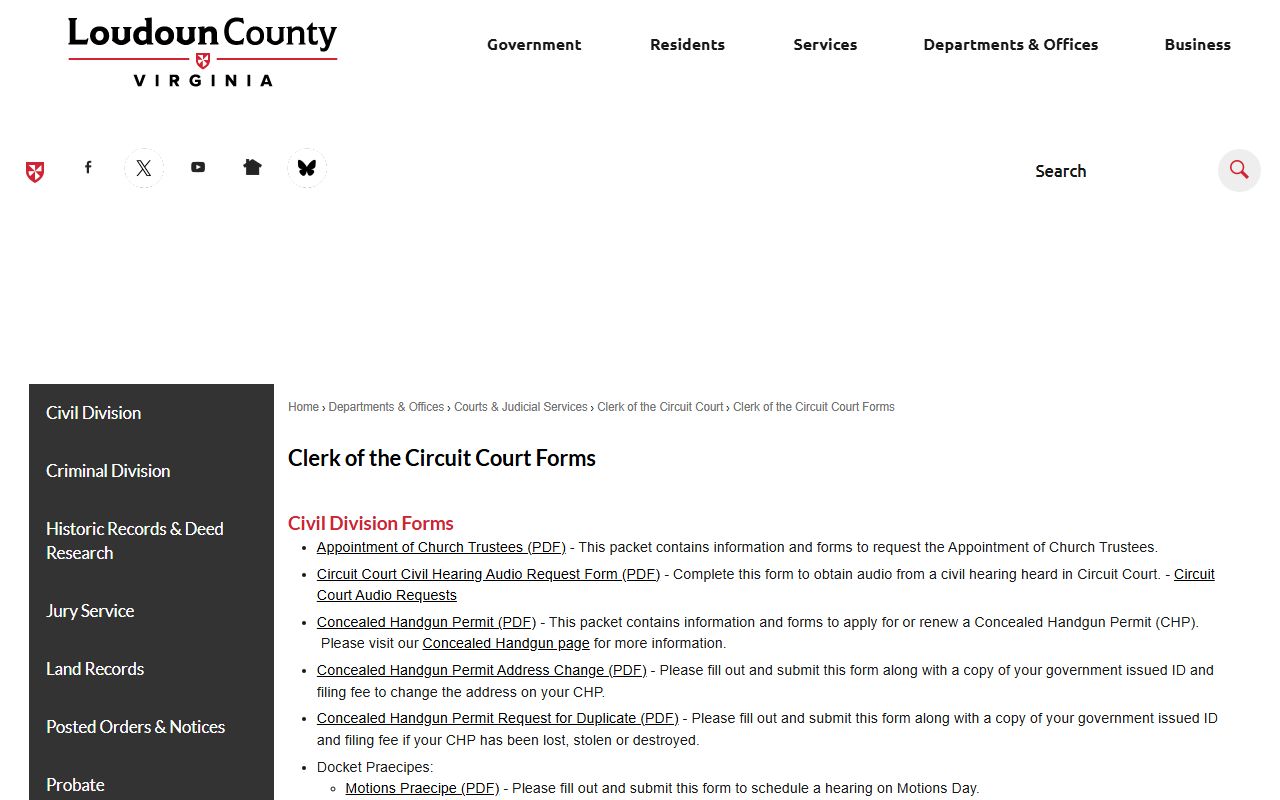
The forms page is a good starting point, since most non-case services begin with the right form.
Records Requests by Division
Copy requests route by record type, not to one general desk. A criminal case copy, a marriage certificate, and a deed each go to a different division. The table shows where common requests belong.
| Request | Where It Goes |
|---|---|
| Civil or divorce case copy | Civil Division copy request |
| Criminal case copy | Criminal Division copy request form |
| Marriage certificate copy | Public Services Division, online or by form |
| Deed or land record | Land Records or remote access service |
| Hearing audio | Civil or Criminal hearing audio request form |
For case searches before a copy request, the court records page explains the online system.
Clerk Fees and Payments
Fees depend on the service and whether a document is certified. Many online searches are free, but copies, filings, and certified records carry a charge. The table lists common Clerk fees.
| Item | Amount |
|---|---|
| Marriage license | $30 |
| Certified marriage copy | $2.50 each |
| Exemplified copy (triple seal) | $5.00 each |
| Divorce filing | $86 |
| Expungement petition | $98 per petition |
The Clerk's fees, fines, and payments page lists the full schedule and the payment kiosk.
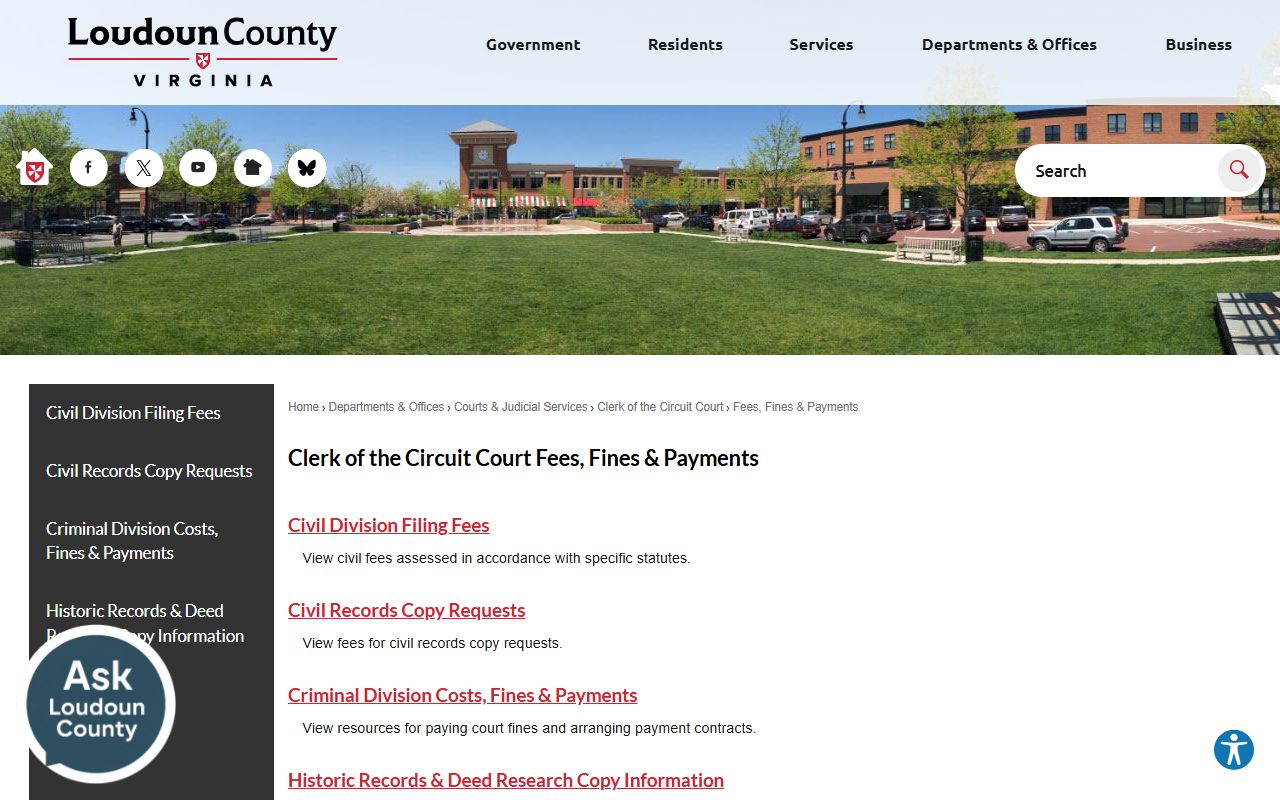
Note that the expungement filing fee cannot be paid by credit card, so check the payment rules before you go.
How to Request a Certified Copy
A certified copy is an official, stamped record, and it is what courts and agencies usually want. The process is short once you know the division. These steps cover a typical request.
- Identify the division that holds the record: civil, criminal, public services, or land.
- Complete that division's copy request form.
- Include the case number, party names, and year if you have them.
- Pay the certified copy fee for the record type.
- Request in person, by mail, or online where the division allows it.
Note: An online printout is not certified; you must order a certified copy from the correct division for legal use.
Marriage and Probate Services
Two of the Clerk's busiest public services are marriage licenses and probate. The Public Services Division issues marriage licenses to applicants who are 18 or older with a photo ID, for a $30 fee. It also handles certified and exemplified copies and notary oaths, with both in-office and virtual appearance appointments. Full marriage details are on the marriage and divorce records page.
Probate is handled by appointment in a separate division. The Clerk admits wills, qualifies executors and administrators, and qualifies guardians and conservators. A person has no legal authority to act for an estate until they qualify before the Clerk. The probate records page covers the process step by step.
Public Kiosks and Online Access
The Clerk gives the public two ways to view records. Online, the Virginia Judiciary case system shows Circuit Court status, hearings, and disposition in real time, though the documents in a file still require an in-person visit. At the courthouse, public kiosks for criminal and civil digital records sit on the fourth floor across from the elevators and inside the Clerk's office on the third floor.
This setup lets most people check a case from home and reserve a courthouse trip for when they need an actual document or a certified copy. It is also why the Clerk's staff can answer many questions by looking at the same online system the public uses.
Land and Historic Records
The Clerk's Land Records Recording Division handles deeds, plats, and recorded documents that affect real estate. Recordings can be dropped off at the land records counter, and a remote access service lets subscribers research land records from elsewhere. The land records page links recording and research options.
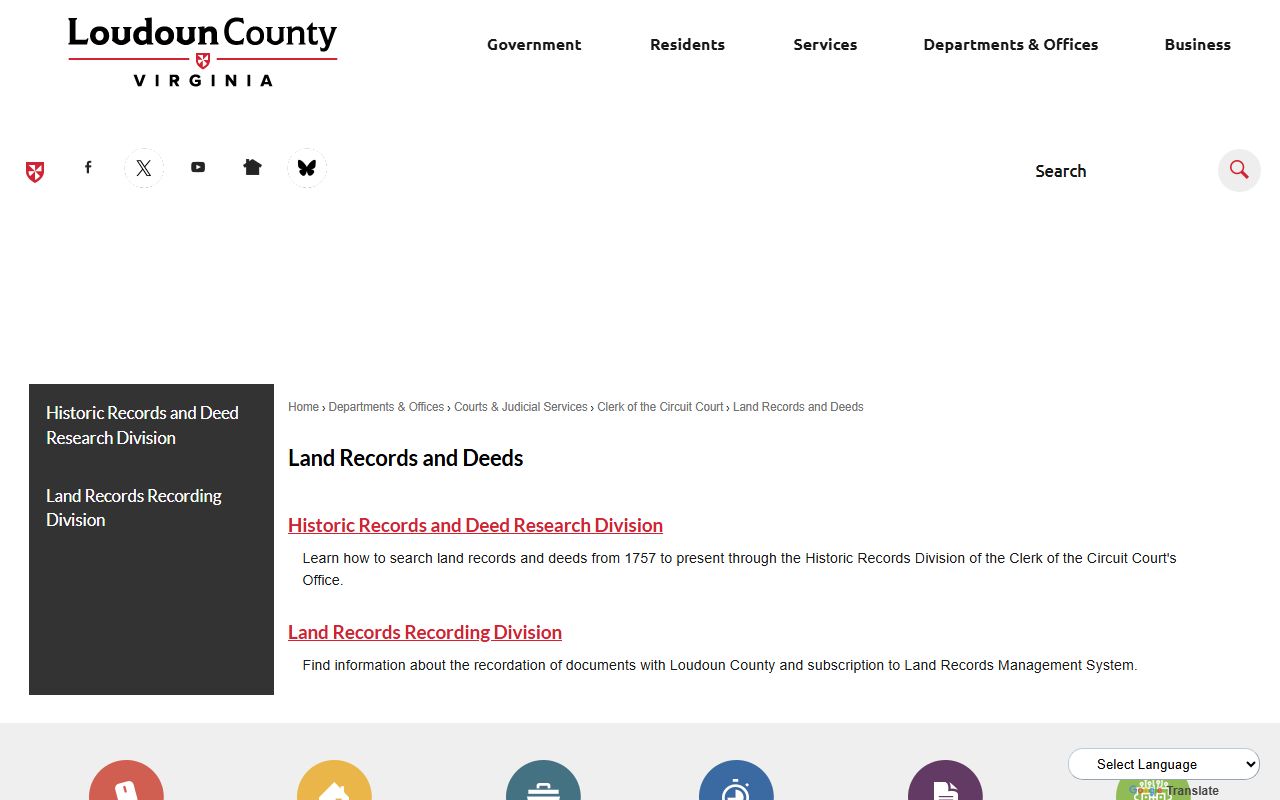
The Historic Records and Deed Research Division is a Loudoun strength. It keeps court records from 1757, and the Clerk says the county has one of the most complete collections in Virginia because the records were never destroyed by fire, war, or weather.
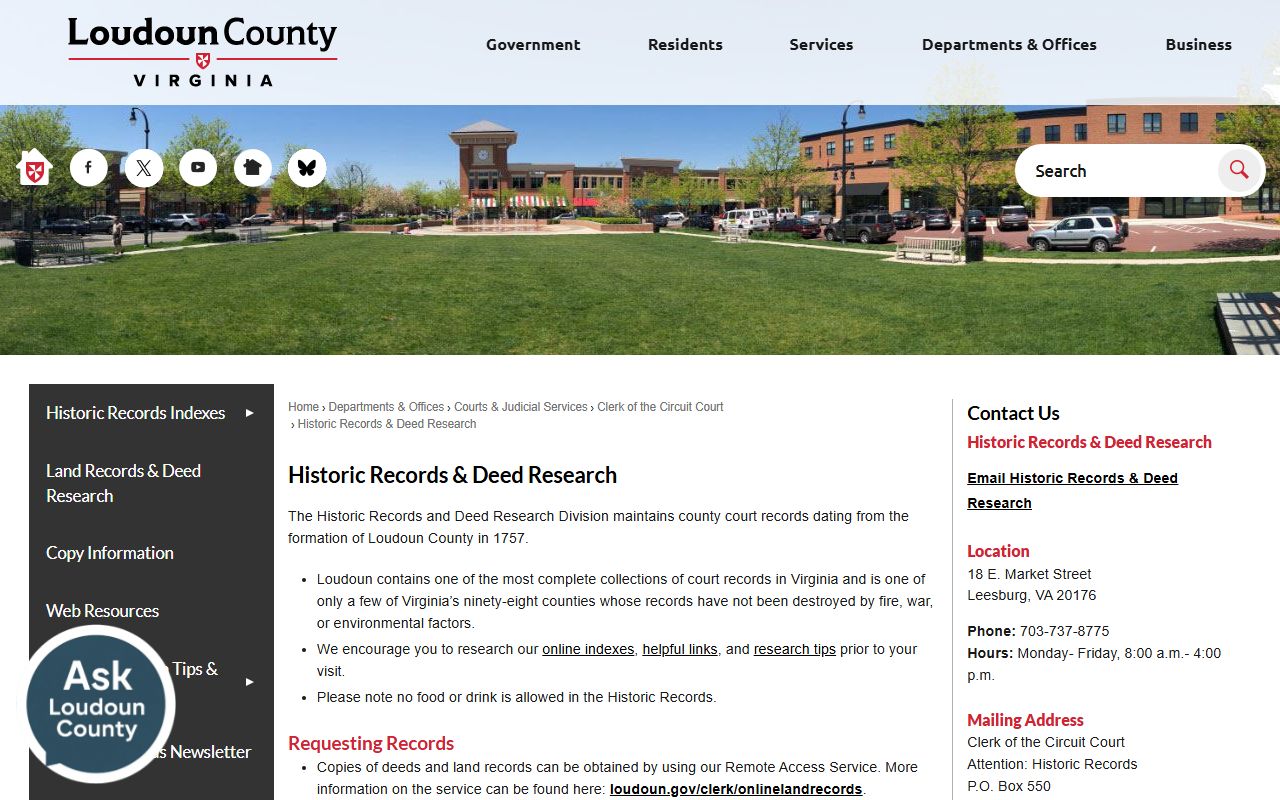
The historic records page asks researchers to use the online indexes and tips first, and notes that no food or drink is allowed in Historic Records.
Legal Aid and Self-Help Links
The Clerk cannot give legal advice, but it does point people to help. The office keeps a legal-aid and links page with referrals for self-represented filers. It lists Legal Services of Northern Virginia, the Loudoun County Bar Association, the Virginia Legal Aid Society, the Virginia Court Self-Help site, and the Lawyer Referral Service.
The Clerk's legal aid and links page gathers these resources in one place.
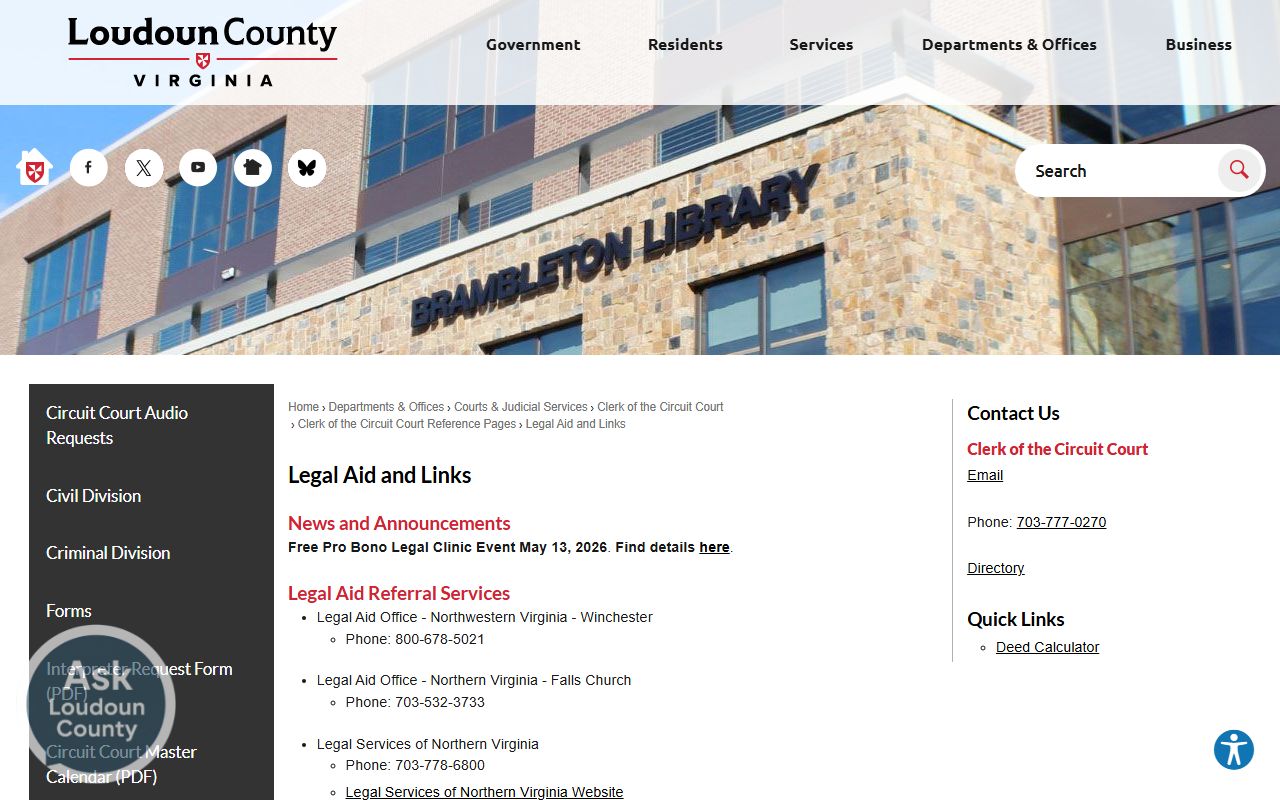
These are useful when a filer needs guidance the Clerk's staff cannot provide.