
Probate Through the Clerk of the Circuit Court
Loudoun does not have a stand-alone probate court. The Clerk of the Circuit Court handles probate, and the Code of Virginia gives the Clerk broad authority. The Clerk can probate a will, appoint and qualify an executor or administrator, qualify a testamentary trustee, and qualify a guardian or conservator for an incapacitated adult or a minor. A person has no legal authority to act as an executor, administrator, trustee, guardian, or conservator until appointed and formally qualified before the Clerk.
The probate office is at the Loudoun County Courthouse in Leesburg and runs by appointment only. The Loudoun probate page lists the division's authority, staff, address, and phone.
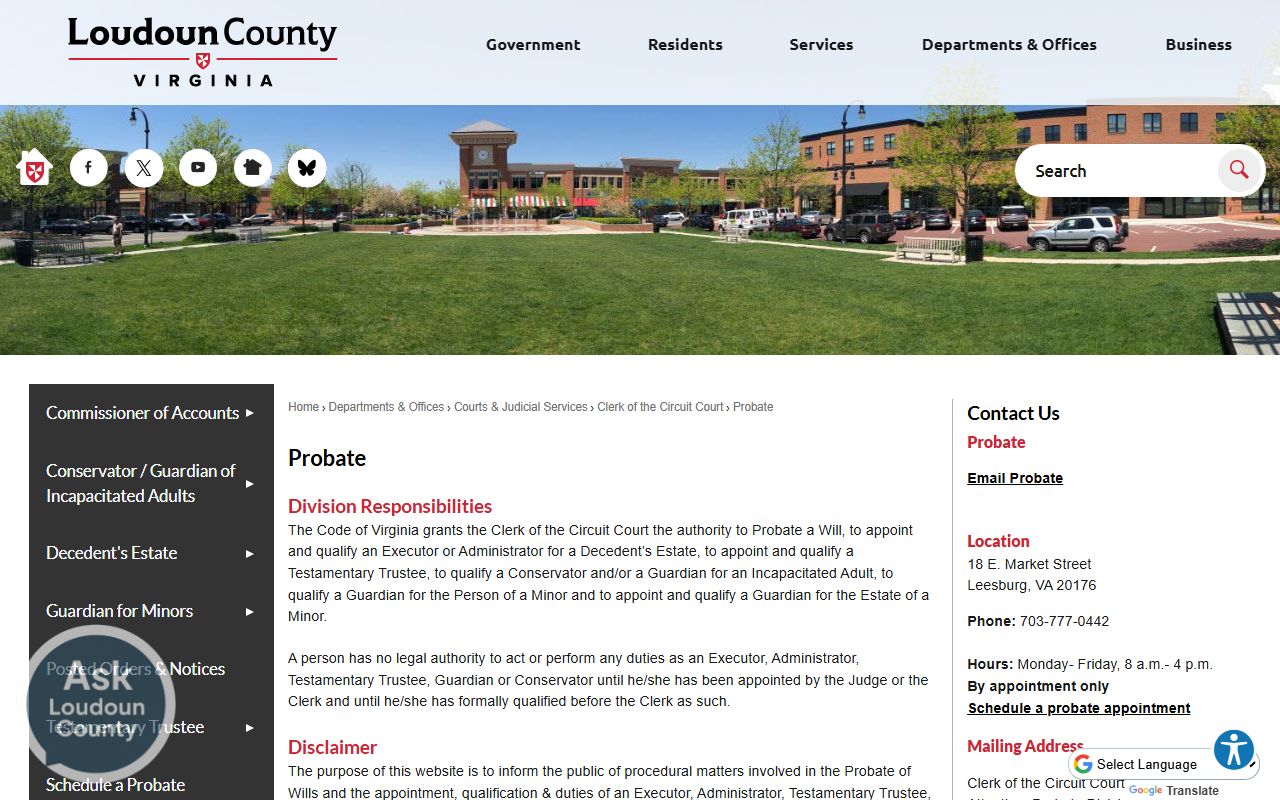
As the page shows, probate is an appointment-based service, so there are no walk-ins for estate qualification.
What Probate Covers in Loudoun County
Probate is broader than just reading a will. It covers the appointment and oversight of several fiduciary roles. A fiduciary is a person trusted to act for someone else's estate or interests. The table sorts the main roles the Clerk appoints and what each one does.
| Role | Authority |
|---|---|
| Executor or administrator | Settles a decedent's estate, with or without a will. |
| Testamentary trustee | Manages a trust created by a will. |
| Conservator | Handles the property of an incapacitated adult. |
| Guardian of an adult | Handles personal care of an incapacitated adult. |
| Guardian of a minor | Handles the person or the estate of a minor. |
| Commissioner of Accounts | Oversees fiduciary inventories and accountings. |
Wills, estate files, inventories, and accounts all flow through this process and become part of the probate record.
Probate Terms Defined
Probate uses words that do not come up in daily life. A few short definitions make the rest of the process easier to follow.
- Testator
- The person who made the will.
- Executor
- The person named in a will to settle the estate.
- Administrator
- The person appointed to settle an estate when there is no will or no qualified executor.
- Intestate
- Dying without a valid will, which changes who may be appointed.
- Conservator
- A fiduciary who manages the property of an incapacitated adult.
Probate Office and Costs
Probate appointments are scheduled with the Clerk's Probate Division. Bring the right documents so the appointment is productive. The contact card has the office details.
Probate Division
18 E. Market Street
Leesburg, VA 20176
703-777-0442
Mon–Fri 8:00 a.m.–4:00 p.m., by appointment
Probate costs depend on the estate value, the recording involved, and the Commissioner of Accounts oversight, so they are not a single flat fee. The Clerk's fees and payments page is the place to confirm current charges before an appointment, since this office sets them by statute and estate size.
How to Probate a Will
Probate follows a clear order. The Clerk decides whether a will can be admitted and who qualifies, then the fiduciary takes on formal duties. These steps cover the path.
- Determine whether the decedent left an original will.
- Schedule a probate appointment with the Clerk.
- Bring the original will, the death certificate, asset information, heir and beneficiary details, and identification.
- The Clerk decides whether the will is admitted and who qualifies.
- The fiduciary qualifies, takes an oath, and posts bond if required.
- The fiduciary follows inventory, accounting, creditor, and distribution duties.
Note: A contested will or a complex estate may need a judge and an attorney, since the Clerk handles qualification, not disputes.
Fiduciary Qualification and Bond
Qualification is the step that turns a named person into a legal one. Until a fiduciary qualifies before the Clerk, they have no power to act for the estate. At the appointment, the Clerk reviews the will and the facts, then admits the will if it can be proven. The person seeking to serve takes an oath. In many cases, they must also post a bond, which is a financial guarantee that they will handle the estate properly.
Once qualified, the fiduciary receives certificates of qualification. These are the documents that banks, courts, and other parties ask to see before they will deal with the estate. An executor settles a will, while an administrator serves when there is no will or no qualified executor. Either way, the authority starts at qualification, not at death, and not at the reading of a will.
Commissioner of Accounts and Estate Duties
After qualification, the work begins. A fiduciary must follow a set of duties that the Commissioner of Accounts oversees. The Commissioner is a court-appointed attorney who reviews estate filings to make sure the fiduciary is doing the job correctly. This oversight protects heirs, creditors, and beneficiaries.
The duties usually include filing an inventory of estate assets, giving notice to creditors, paying valid debts and taxes, and filing periodic accounts that show what came in and what went out. The estate is then distributed to the people entitled to it. These filings become part of the probate record and are generally open for inspection, which is why estate research often turns up inventories and accounts, not just the will itself.
Probate Record Search Fields
To research an estate, a few details point the Clerk to the right file. A full legal name is the key. A date of death and a fiduciary name help narrow the search. Some older estate material may sit in Historic Records. The table lists what helps a probate search.
| Field | Required | Notes |
|---|---|---|
| Decedent name | Yes | Use the full legal name. |
| Date of death | Optional | Narrows the estate search. |
| Fiduciary name | Optional | Executor, administrator, trustee, guardian, or conservator. |
| Will or estate file | Varies | Contact the Probate Division; older files may be in Historic Records. |
| Appointment | Yes | Probate is by appointment; there are no walk-ins. |
Probate Records and Access Rules
Most probate and estate records held by the Clerk are open to inspection. That follows the general rule for circuit clerk records under Virginia Code § 17.1-208, which says those records are open unless another law restricts them. So a recorded will, an inventory, or an account is generally available for research.
Adoption is the clear exception. Adoption records are not ordinary public probate records. Disclosure of identifying information is restricted under Virginia Code § 63.2-1246 and handled through separate adoption processes.
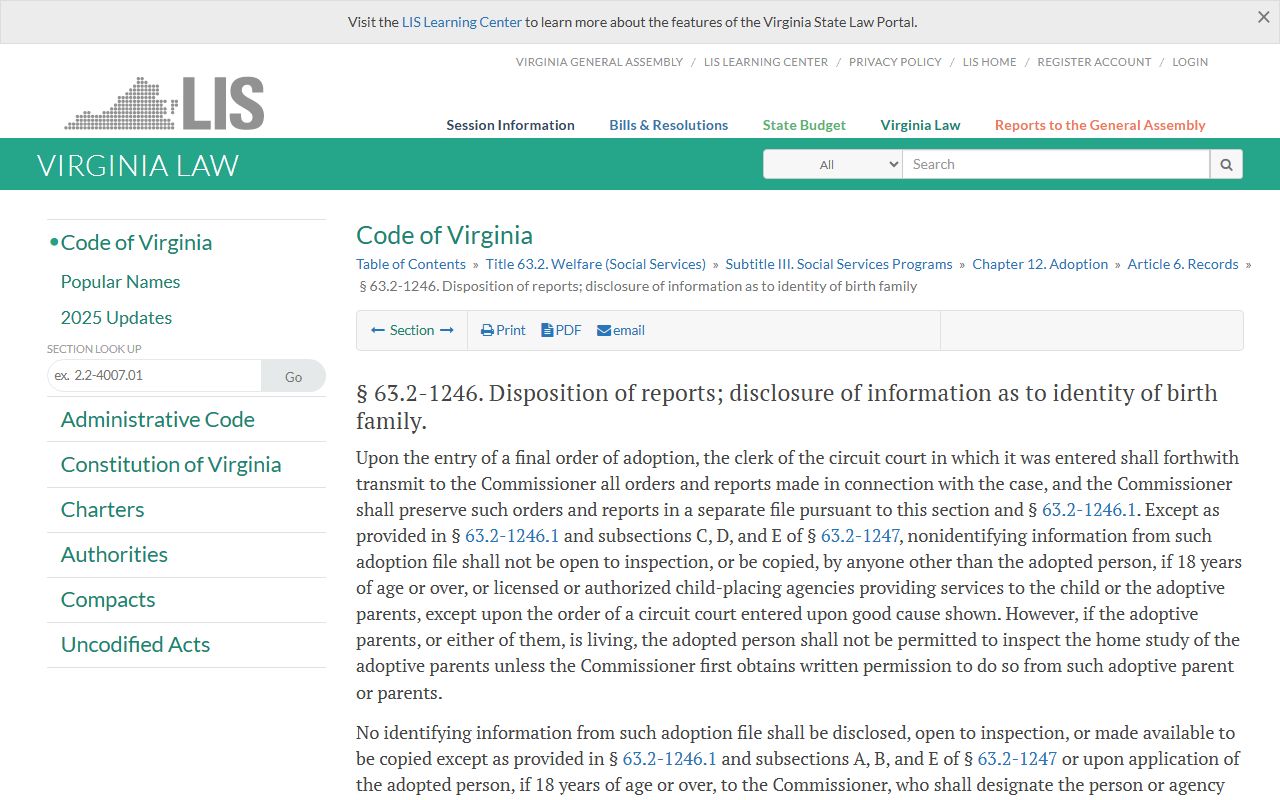
So while most estate files are open, adoption records get strong confidentiality protection under the statute above.
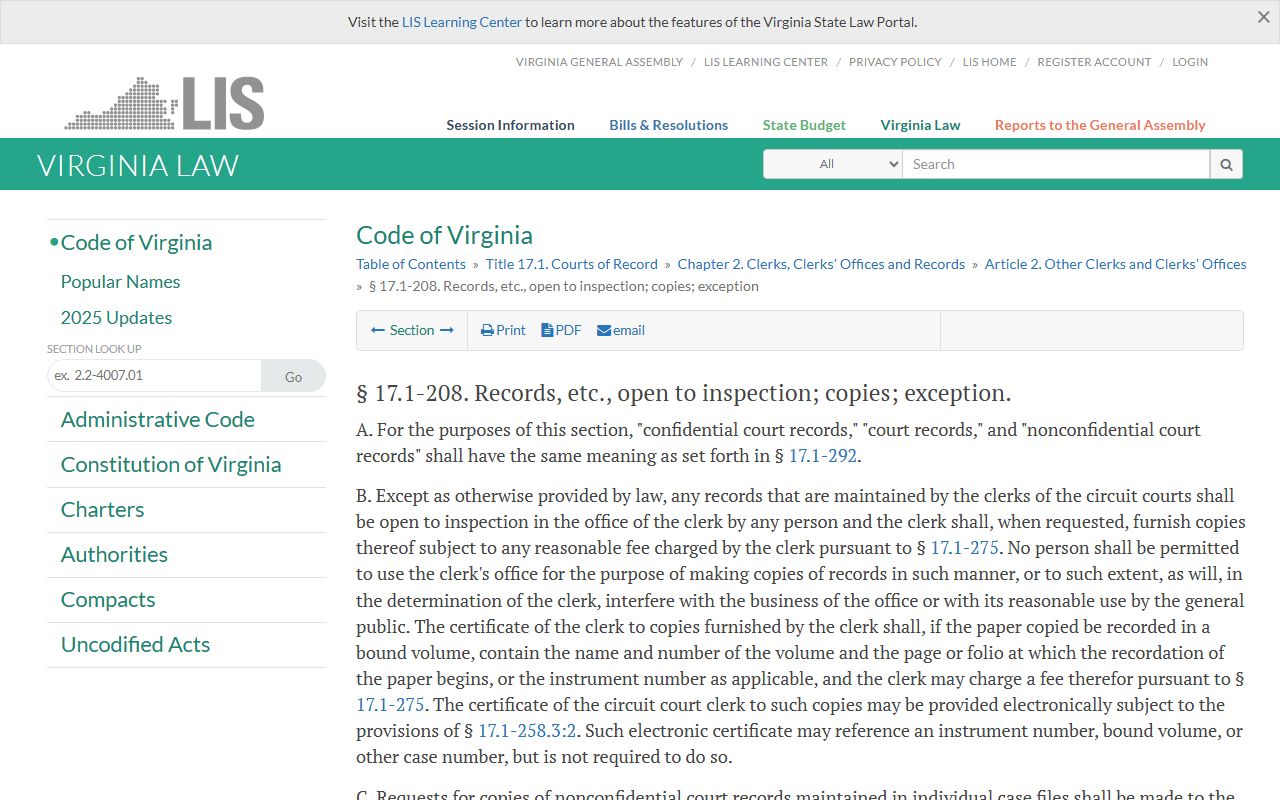
The circuit clerk records statute is the access anchor for most probate and estate files in the county.