
How to Search Loudoun County Court Records
Most Loudoun County court records start with one tool: the Virginia Judiciary Online Case Information System. It is free and open to the public. You can use it from home, an office, or a library. The Clerk's Office says the Circuit Court data is real time and current, which means it updates as the case moves. The system covers Circuit, General District, and appellate cases, so it is the first stop for a name search or a case number.
Before you start, have a few things ready. A full last name works better than a first name. A case number is faster still, but the format matters. Circuit Court numbers use an uppercase prefix, such as CL for civil and CR for criminal. One caveat to keep in mind: the online system shows status, hearings, and disposition, but not the documents in the file. For copies of pleadings or orders, you visit the Clerk.
The Virginia Judiciary Online Case Information System is the statewide search portal that lets you pick the Loudoun court.
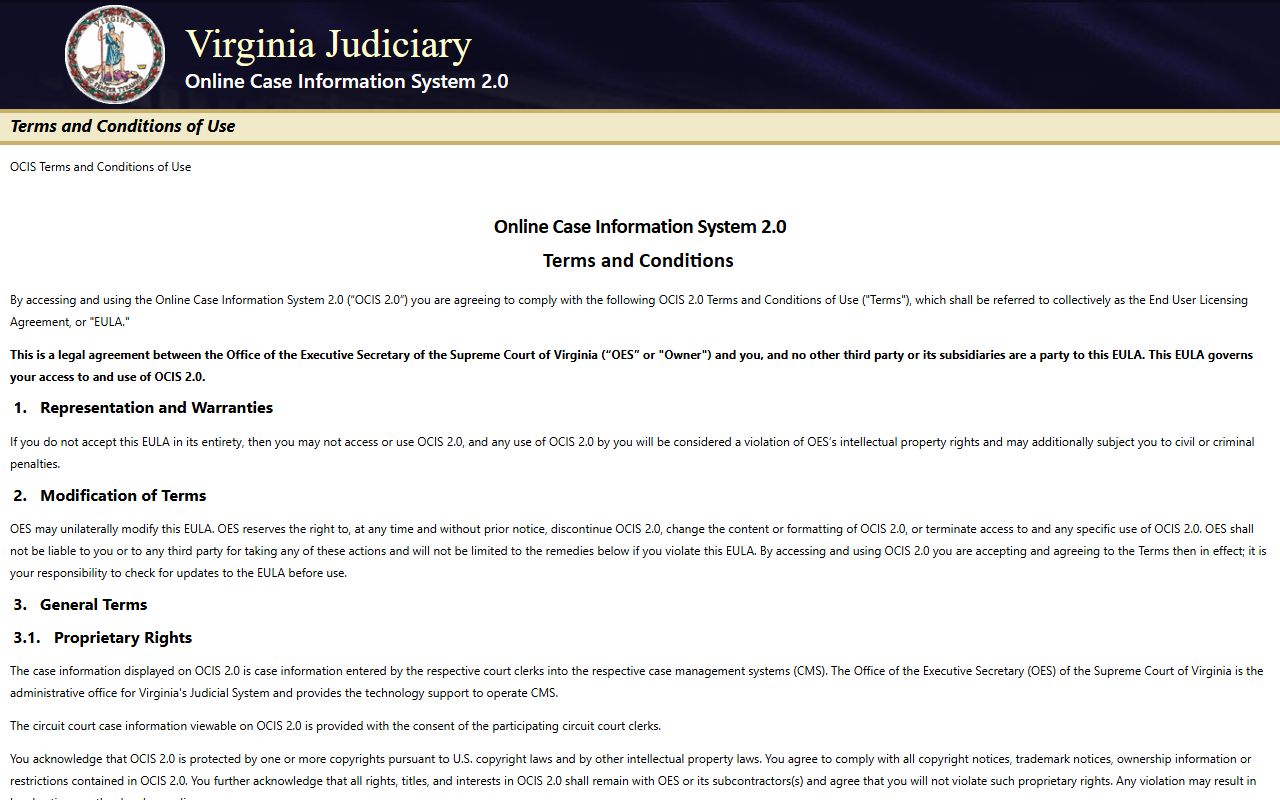
The landing page lets you choose the court level first, then search by name, case number, or hearing date. Here is the basic order of steps.
- Open the Virginia Judiciary case information system and choose the Loudoun court.
- Pick the division, Civil or Criminal, for Circuit Court searches.
- Search by Name, Case Number, or Hearing Date.
- Click a case number from the result list to open the case details.
- Request a certified copy from the Clerk if you need the document itself.
The Loudoun County Judicial System
Virginia sets up its courts in levels, and Loudoun hosts a local office of each one. At the top of the trial level is the Circuit Court, the court of general jurisdiction. Below it sit two limited courts: the General District Court and the Juvenile and Domestic Relations District Court. Magistrates work at the front end, issuing warrants and setting bail. Appeals climb from the district courts up to Circuit Court, and from Circuit Court up to the state appellate courts.
Loudoun is part of the 20th Judicial Circuit and the 20th Judicial District. Circuit judges hear the felony trials, divorce cases, and large civil suits. District judges handle the day-to-day docket. The chart shows how the system stacks up.
Case flow: Magistrate › General District Court › Circuit Court › Court of Appeals of Virginia › Supreme Court of Virginia
| Court | Jurisdiction | Case Types |
|---|---|---|
| Circuit Court | General | Felonies, divorce, civil over $25,000, wills and estates |
| General District Court | Limited | Traffic, misdemeanors, civil up to $25,000, small claims |
| J&DR District Court | Limited | Juvenile offenses, custody, support, family abuse |
| Magistrate's Office | Pre-trial | Warrants, bail, emergency protective orders |
The Virginia Judicial System keeps a clear court system overview that explains each level.
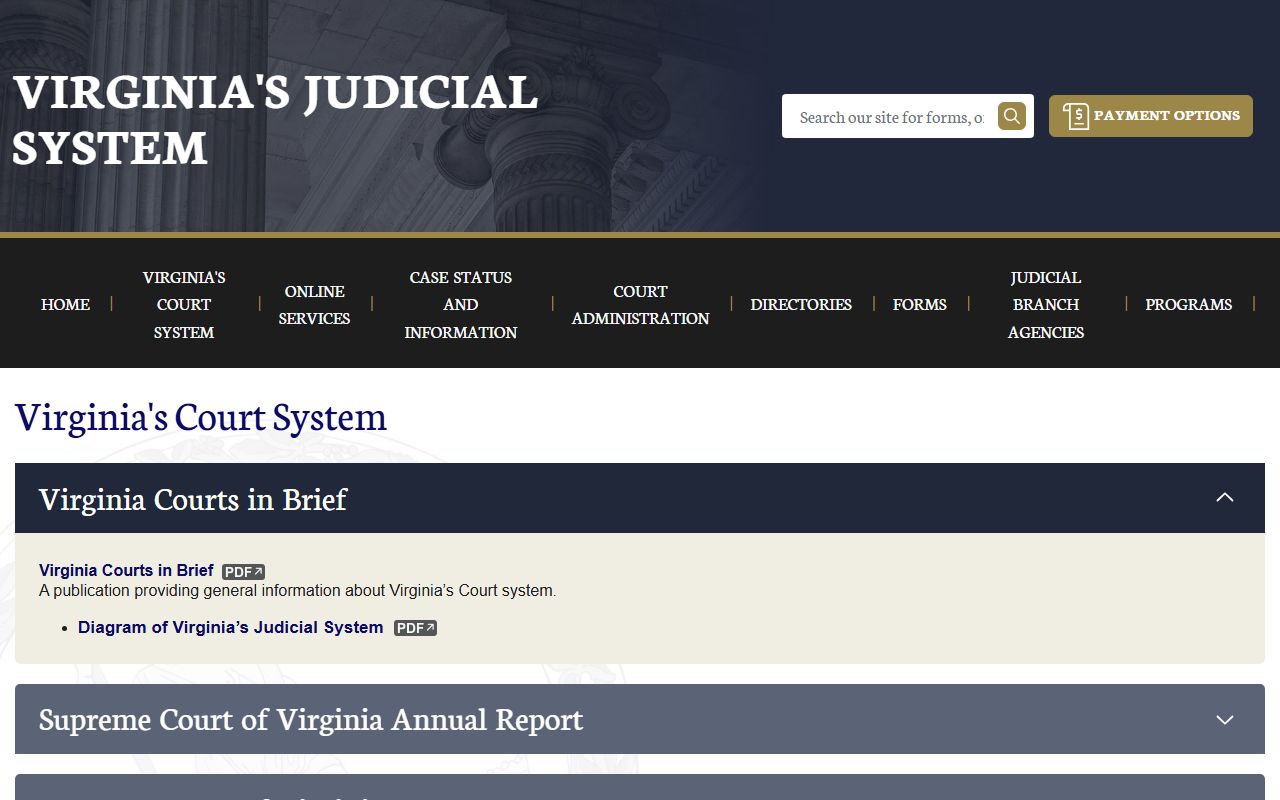
The overview confirms why a search for "district court" in Loudoun often leads to the Circuit Court, which is the primary trial court for serious cases. The Loudoun County Circuit Court page covers that court in full.
Loudoun County Courthouses
The courthouse is really a complex of three buildings in downtown Leesburg. The Loudoun County Courthouse at 18 E. Market Street holds the Circuit Court, the J&DR Court, the Clerk's Office, and the public record kiosks. The General District Courthouse at 2 Church Street NE holds the General District Court, the Commonwealth's Attorney, and Community Corrections. The historic Charles Hamilton Houston Courthouse marks the old courthouse square at King and Market Streets. The cards below give the address and phone for each.
Adult Detention Center
42035 Loudoun Center Place
Leesburg, VA 20175
703-777-0405
The county's trip-planning page walks visitors through parking, the free shuttle, security, and accessibility.
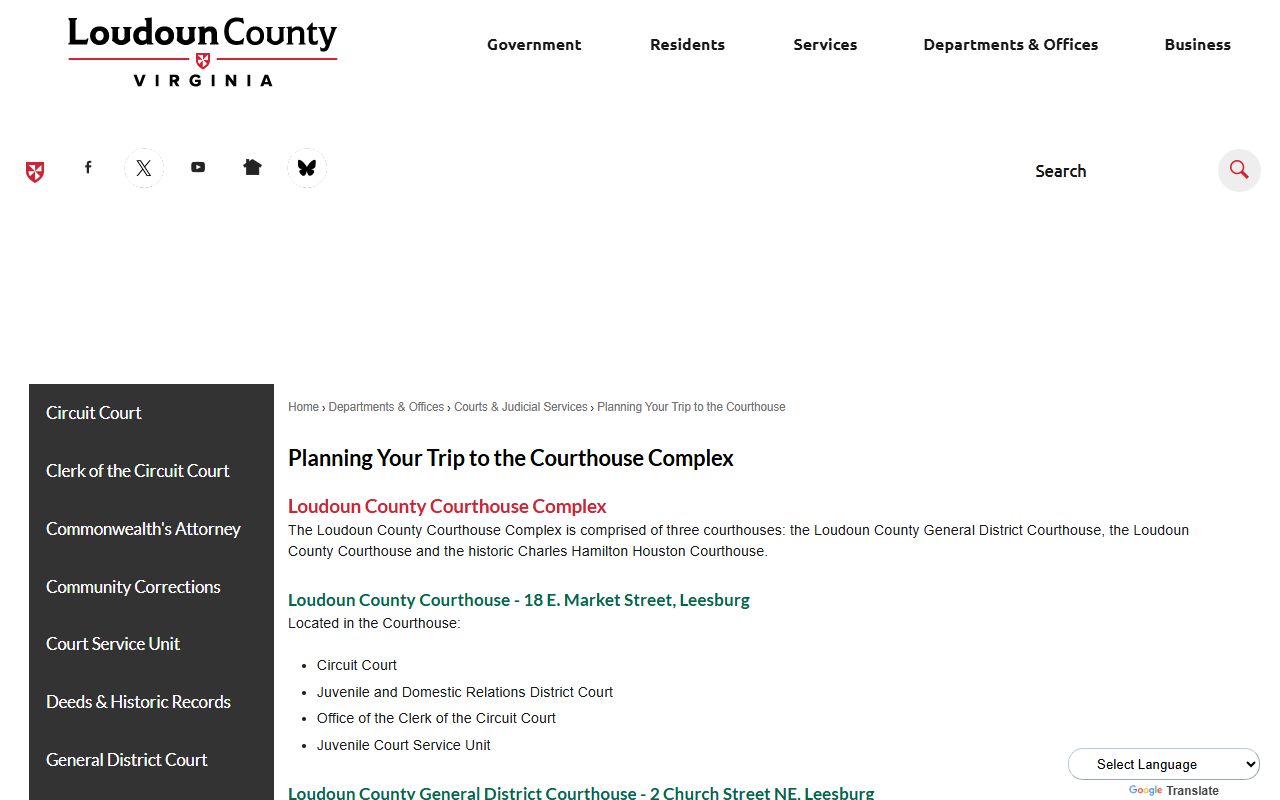
The page is worth a read before any visit, since the courthouse bans cell phones with cameras, laptops, tablets, and smartwatches unless they are stored in lockers.
Types of Court Records Available in Loudoun County
Loudoun courts produce many kinds of records, and they are split across the courts that make them. The Circuit Court holds felony files, divorce, civil suits, and estate records. The General District Court holds traffic, misdemeanor, and small civil records. The J&DR Court holds juvenile and family matters, most of which are closed to the public. The Clerk also keeps land records and historic court papers going back to 1757.
Here is a quick map of the main record types and where they live.
- Criminal records - warrants, indictments, pleas, and sentencing orders from felony and misdemeanor cases.
- Civil records - complaints, judgments, garnishments, name changes, and appeals.
- Family and divorce records - divorce decrees in Circuit Court; custody and support in J&DR.
- Probate records - wills, estates, and fiduciary qualifications handled by the Clerk.
- Traffic records - citations, fines, and dispositions from the General District Court.
The Loudoun Circuit Court page describes the court that holds most of the serious civil and criminal records.
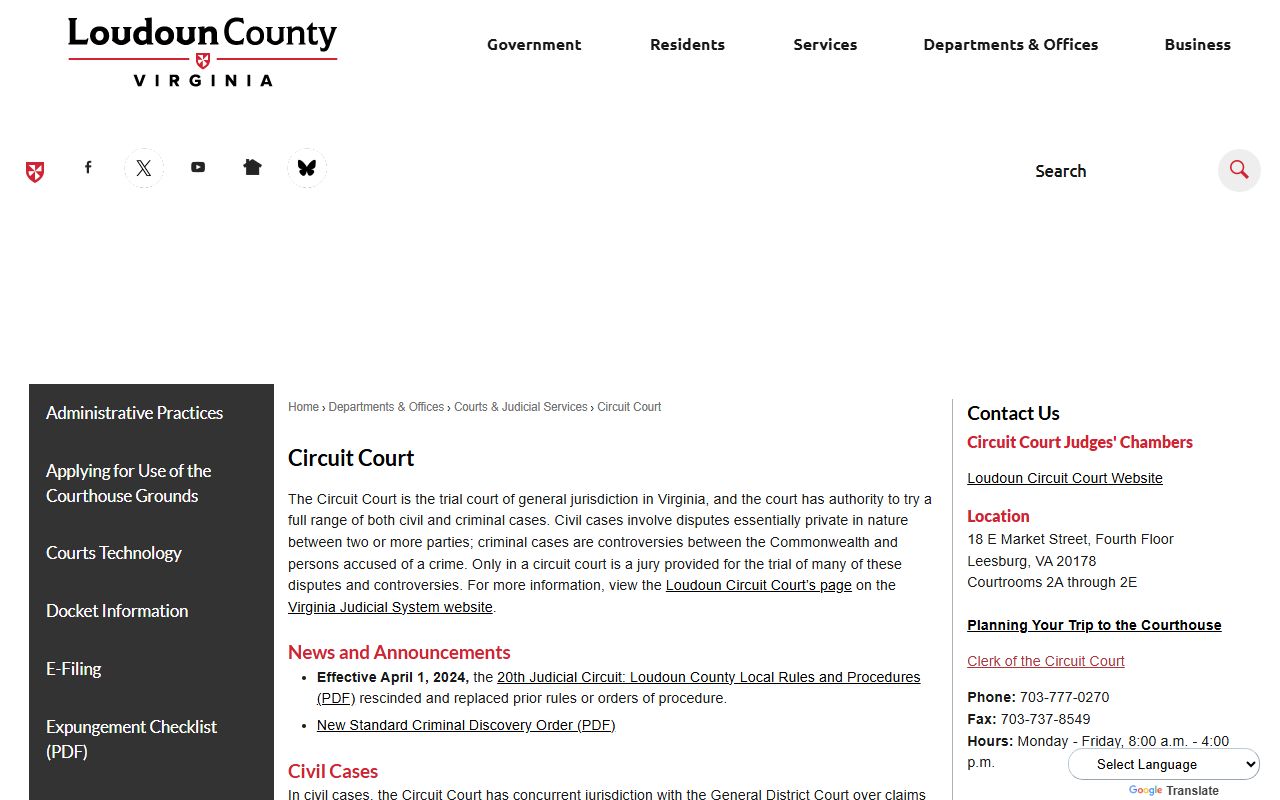
As shown, the Circuit Court has the broadest jurisdiction, which is why so many record searches end up there.
What Loudoun County Court Records Show
A case record holds more than a name and a charge. The Loudoun Clerk's own case-information guide breaks down the fields you see in an online result. The case details page shows party information, hearings, and the final disposition. Tabs at the top open the pleadings, orders, and service history. The table lists the core fields and what each one tells you.
| Field | What It Shows |
|---|---|
| Case Number | The court's ID for the case; Circuit uses CL for civil and CR for criminal. |
| Filing Date | The date a pleading was received; for an order, the date the judge signed it. |
| Parties | Plaintiff and defendant, or Commonwealth and defendant in a criminal case. |
| Hearings | Court date, time, courtroom, and the judge if one is assigned. |
| Disposition | The final result, shown only after the case closes. |
| Judgment | Who the judgment was awarded to and the final order date. |
If no judge or courtroom is listed, the case has not been assigned yet, and the Clerk cannot give that detail until it is.
Public Access Laws for Loudoun County Court Records
Virginia treats most court records as open, but two systems govern access. The Freedom of Information Act covers administrative records held by public bodies. Court files follow their own access statutes and rules. So a request for a county report goes to a FOIA officer, while a court file goes to the Clerk or the online case system. A handful of statutes set the ground rules, and three of the most useful are below.
Key Statutes:
Virginia Code § 2.2-3700 - the Freedom of Information Act; public records and meetings are presumed open unless an exemption applies.
Virginia Code § 17.1-208 - circuit clerk records are open to inspection and copying unless another law restricts them.
Virginia Code § 16.1-305 - juvenile court records are confidential and open only to listed people and agencies.
The public records page explains how to file a FOIA request and what it costs.
Records That Are Restricted or Confidential
Not every court record is open. Some are sealed by statute, others by a judge's order. The biggest closed category is juvenile cases. Loudoun's J&DR Court states that all juvenile cases are confidential and that the clerk may give only court dates and times by phone. Anything more requires a photo ID and a qualifying reason. Adoption records, expunged criminal records, and some mental-health proceedings are also off limits to the general public.
To view a sealed or expunged record, you need a court order. An expungement does not destroy the file; it removes it from public access and seals it. After that, only a court can open it. The J&DR Court page spells out the juvenile confidentiality rules.
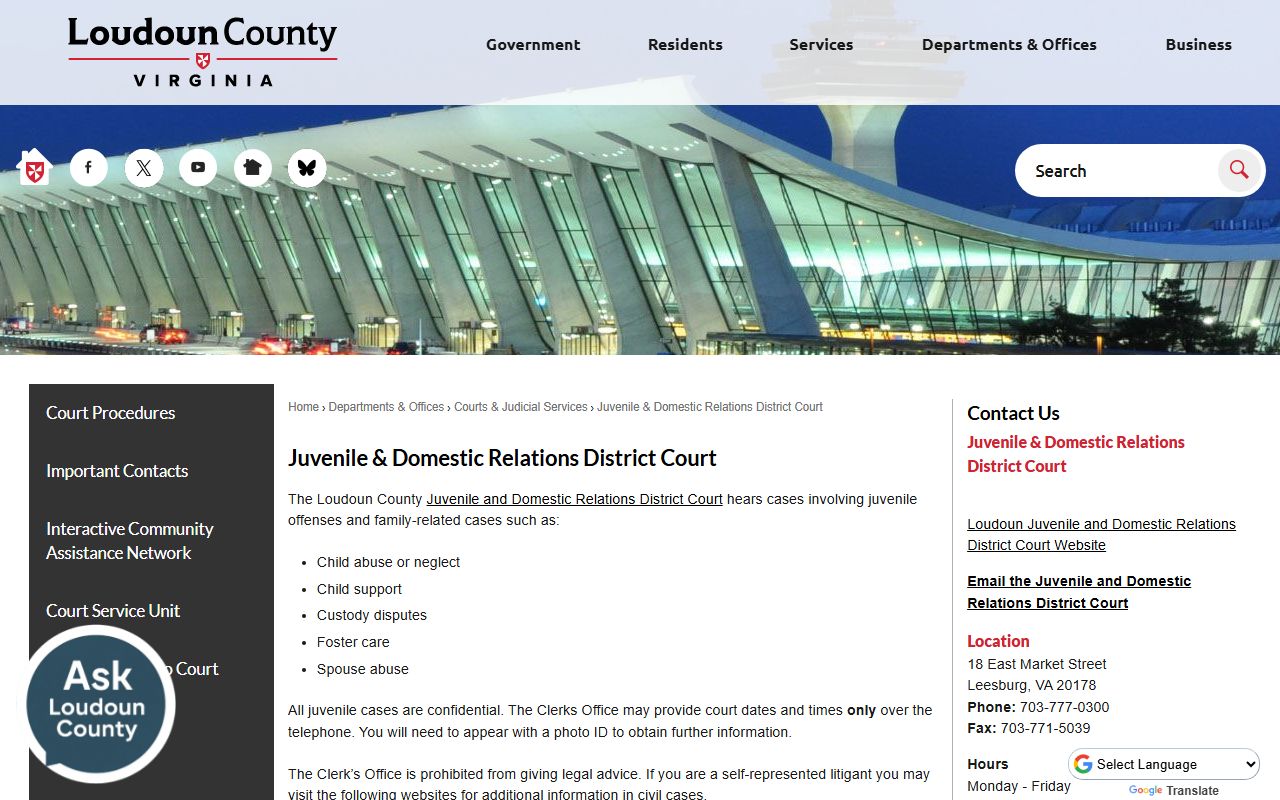
The page makes clear that juvenile records get stronger protection than ordinary adult case files.
Specialty Courts in Loudoun County
Loudoun runs problem-solving dockets that handle cases tied to mental health, addiction, and military service. These are not separate buildings. They are docket tracks inside the existing courts, each approved by the Supreme Court of Virginia. They use frequent court dates, treatment plans, and close supervision instead of a single trial and sentence.
The county has three. The Circuit Court runs a Drug Court. The General District Court runs a Mental Health Docket on Friday afternoons. The newest is the Veterans Treatment Docket, which held its first hearing on March 7, 2023, and serves justice-involved veterans with mental-health or co-occurring needs. Its team pulls in Community Corrections, the Commonwealth's Attorney, the Sheriff's Office, the Public Defender, and the U.S. Department of Veterans Affairs.
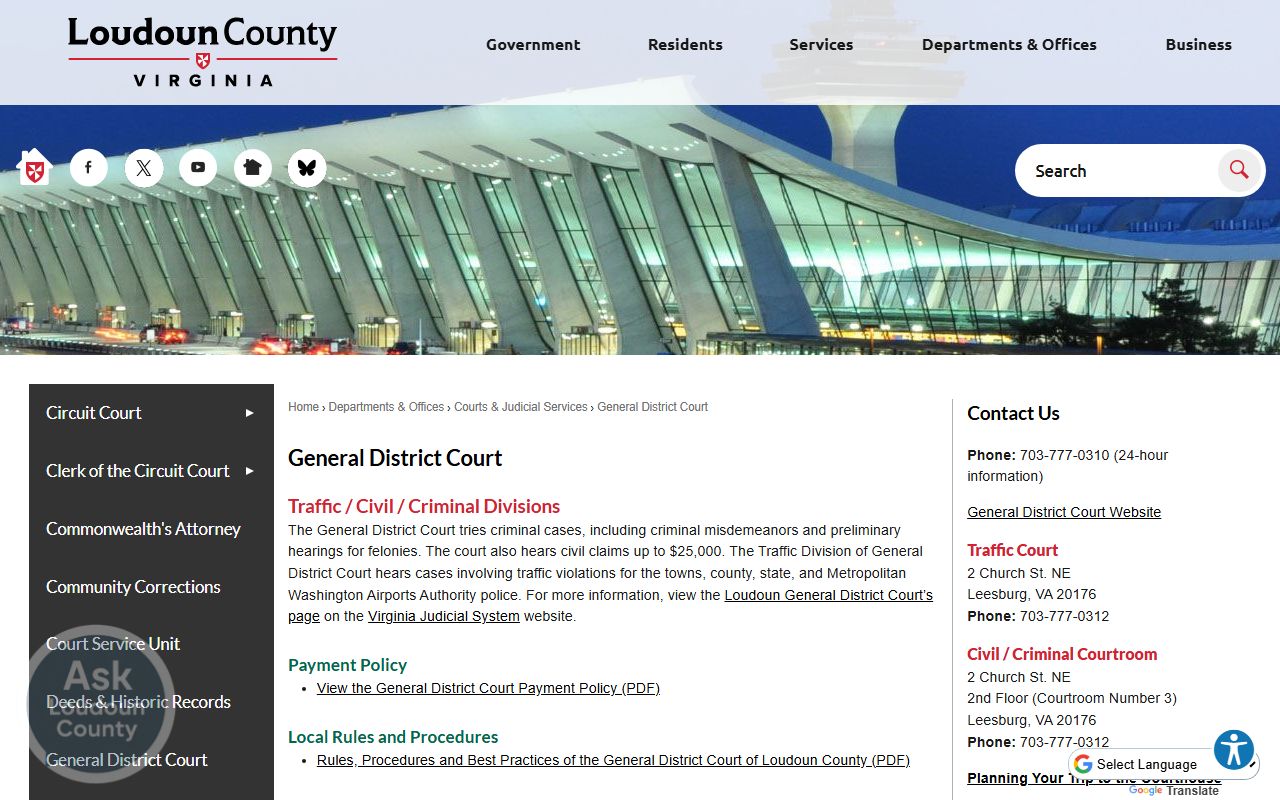
The General District Court page shows where the Veterans and Mental Health dockets sit in the weekly schedule.
Loudoun County Sheriff and Jail
The Loudoun County Sheriff's Office runs the Adult Detention Center at 42035 Loudoun Center Place in Leesburg. The jail holds maximum, medium, and minimum security inmates. New arrivals spend 48 to 72 hours in intake for medical clearance before they join general population. The facility also runs a Work Release Center that can house up to 96 non-violent inmates near release. Sheriff Mike Chapman leads the office.
Loudoun does not publish an online jail roster, so current custody is confirmed by phone at 703-777-0405. See the Loudoun County inmate records page for how to verify custody and the warrant records page for active warrants. Recent releases and state transfers are covered on the released inmates page.
Marriage, Divorce, and Probate Records
The Clerk of the Circuit Court handles the records that mark the big moments of life. Marriage licenses cost $30 and need both applicants to be 18 or older with a photo ID. Divorce is filed in Circuit Court and needs six months of Virginia residency. Probate, which proves a will and appoints an estate's representative, is handled by the Clerk by appointment. The marriage and divorce records and probate records pages cover each in detail.
- Testator
- The person who made a will.
- Executor
- The person named in a will to settle the estate.
- Conservator
- A fiduciary who manages the property of an incapacitated adult.
Loudoun County Court Records Fees
Fees at the Clerk's Office depend on the record and whether you need it certified. Many searches are free online, but copies, filings, and certified documents carry a charge. The table lists common fees pulled from the Clerk's published schedule.
| Item | Amount |
|---|---|
| Marriage license | $30 |
| Certified marriage copy | $2.50 each |
| Divorce filing | $86 |
| Expungement petition | $98 per petition |
The Clerk's fees, fines, and payments page lists the full schedule and payment options.
How to Interpret Loudoun County Court Records
Online case results use shorthand that can confuse a first-time user. In the Pleadings/Orders tab, "Filed" is the date the Clerk received the document, and "Type" is the document title. The phrase "ORDER TO" means a proposed order was sent to a judge's chambers and is under review. When it reads "ORD REJ," the judge or law clerk rejected the order and a letter went out to explain why.
One more distinction matters. A charge is not a conviction. An arrest or an indictment only starts a case; the disposition tells you how it ended. A case can be dismissed, found not guilty, or end in a plea. Read the disposition field before you draw any conclusion from a record.
Accuracy and Record Limitations
Online court data is current but not perfect. The Circuit Court system updates in real time, yet a brand-new filing or a just-signed order may take time to appear. Some records never show online at all, like juvenile and sealed files. If a detail looks wrong, the fix is to call the division that holds the file, not to rely on a screenshot.
Note: Always confirm a name, date, or disposition with the Clerk or the court before you rely on an online record for any legal or personal decision.
History of Loudoun County Courts
Loudoun County was formed in 1757, and its court records reach all the way back. The Clerk's Historic Records and Deed Research Division says Loudoun holds one of the most complete court-record collections in Virginia. Unlike many counties, its records were never destroyed by fire, war, or weather. That makes deep deed, probate, and chancery research possible here in a way it is not in burned-record counties.
The complex carries that history in its buildings. The historic Charles Hamilton Houston Courthouse honors a major civil-rights lawyer and legal strategist. The county plans a July 4, 2026 event there for the 250th anniversary of American independence.
Frequently Asked Questions
How do I search Loudoun County Circuit Court records online?
Use the Virginia Judiciary Online Case Information System and pick Loudoun Circuit. Choose the division, Civil or Criminal, then search by name, case number, or hearing date. If you search by case number, use the uppercase prefix, CL for civil or CR for criminal. The results show parties, hearings, and disposition. To see the documents in the file, you must visit the Clerk's office.
Does Loudoun County have a separate county clerk?
No. For court records, Loudoun uses a unified Clerk of the Circuit Court. That office keeps Circuit Court files, land records, probate, marriage licenses, jury services, and historic records. The General District and J&DR courts run their own clerk operations, but there is no separate elected county clerk or district clerk like some other states have.
Where is the Loudoun County Courthouse?
The main courthouse is at 18 E. Market Street in Leesburg, where the Circuit Court, J&DR Court, and Clerk's Office sit. The General District Court is nearby at 2 Church Street NE. Clerk hours are Monday through Friday, 8:00 a.m. to 4:00 p.m. Free parking and a shuttle run from the Pennington Garage on Church Street NE.
More on the Loudoun County Court Records FAQ page.