
How Loudoun County Court Dockets Work
Each court keeps a daily docket. It lists the cases set for hearings, the time, and the courtroom. Some dockets are for trials, others for motions, arraignments, or bond hearings. The Circuit Court and the General District Court both publish their schedules, and many entries are searchable by hearing date in the state case system. A docket tells you what is happening and when. It does not show the full record, which stays in the case file with the Clerk.
The hearing-date search is the docket tool most people want. You pick the court, set a date on the calendar, and the system returns the cases on that day. This is useful when you know roughly when a case is set but not the case number. The Virginia Judiciary Online Case Information System runs the search for Loudoun's Circuit and district courts.
General District Court Docket Schedule
The Loudoun General District Court runs the busiest docket in the county. Its schedule is set by weekday and case type, not first-come. Civil returns and motions fill the mornings. Trials and small claims run at set times. Knowing the pattern helps you read why a case is set on a certain day. The table shows the general weekly shape of the docket.
| Day | Common Docket Blocks |
|---|---|
| Monday | Civil returns and motions; State Police and photo-speed traffic; bond hearings; arraignments and preliminary hearings; Sheriff's Office traffic |
| Tuesday | Small claims; criminal Sheriff's Office cases; bond hearings; State Police traffic; Veterans Docket on first and third Tuesdays |
| Wednesday | Civil returns and motions; VSP and airport-authority traffic; bond hearings; arraignments; preliminary hearings |
| Thursday | Unlawful detainer returns; protective-order trials; Sheriff's Office traffic and criminal; civil trials |
| Friday | Specially set trials; sentencing and review docket; VDOT cases; Mental Health Docket staffing and Mental Health Docket |
Traffic dockets split by agency, so you may see separate blocks for Virginia State Police, the Loudoun Sheriff's Office, Leesburg, and the Metropolitan Washington Airports Authority. The Virginia Judicial System Loudoun General District Court page publishes the full schedule.
Specialty Dockets on the Calendar
Loudoun's problem-solving dockets sit inside the regular schedule. The Veterans Treatment Docket meets on the first and third Tuesday afternoons, with a staffing session before the docket and a deferred-findings review after. The Mental Health Docket meets Friday afternoons, with a staffing session at 1:00 p.m. and the docket at 2:00 p.m. The Circuit Court also runs a Drug Court. These tracks use frequent court dates instead of a single trial.
Because of this, a hearing date often hints at the docket type. A first or third Tuesday afternoon may relate to the Veterans Docket. A Friday afternoon may be sentencing, VDOT, or the Mental Health Docket. The public case result will not always label the docket, so use the schedule to read the calendar, not to assume an outcome.
Note: Specialty docket labels help you understand the court's calendar, but they may not appear on a public case result for a specific person.
Reading Docket and Order Status
Online dockets use shorthand that can confuse a first-time user. In the Pleadings/Orders tab, "Filed" is the date the Clerk received the document. For an order, that filed date is the day the judge signed it. "Type" is the document title, "Party" shows who filed it, and "Remarks" describes the item. These fields come straight from the Loudoun Clerk's case guide.
Two status phrases come up a lot. "ORDER TO" means a proposed order went to a judge's chambers and is under review; the judge's initials may show. Once that phrase drops off, the order came back signed or rejected. "ORD REJ" means the order was rejected and a letter went to the party to explain why. Reading these correctly keeps you from misreading a pending order as a final one.
Hearing Types and Continuances
Not every docket entry is a trial. Many are short procedural settings. An arraignment reads the charge and takes a plea. A preliminary hearing decides whether a felony has enough proof to move up to Circuit Court. A motions docket handles requests made before trial. A bond hearing sets release terms. Reading the hearing type tells you what will actually happen that day, which matters if you plan to attend.
Dates also move. A continuance is a postponement of a hearing or trial, and it can reset a case to a later docket. When that happens, the old date drops off and a new one appears in the case system. So a docket you saw last week may not match today. Always check the current hearing date before you show up. A few common terms help.
- Arraignment
- The first hearing where the charge and rights are addressed and a plea may be taken.
- Preliminary hearing
- A General District hearing to decide probable cause for a felony charge.
- Continuance
- A postponement that moves a hearing or trial to a new date.
Circuit Court Hearings and Dockets
The Circuit Court sets its own hearings for felony trials, civil trials, divorce, and motions. Its case details page lists each hearing with the date, time, courtroom, and judge when assigned. If no judge or courtroom is set, the case has not been designated yet, and the Clerk cannot give that detail until it is. Circuit dockets move slower than district dockets because the cases are larger and many involve juries.
For the records behind a Circuit docket entry, see the Loudoun County court records page. The Circuit Court page covers the court's jurisdiction and how cases reach it.
Federal Court Dockets for Loudoun County
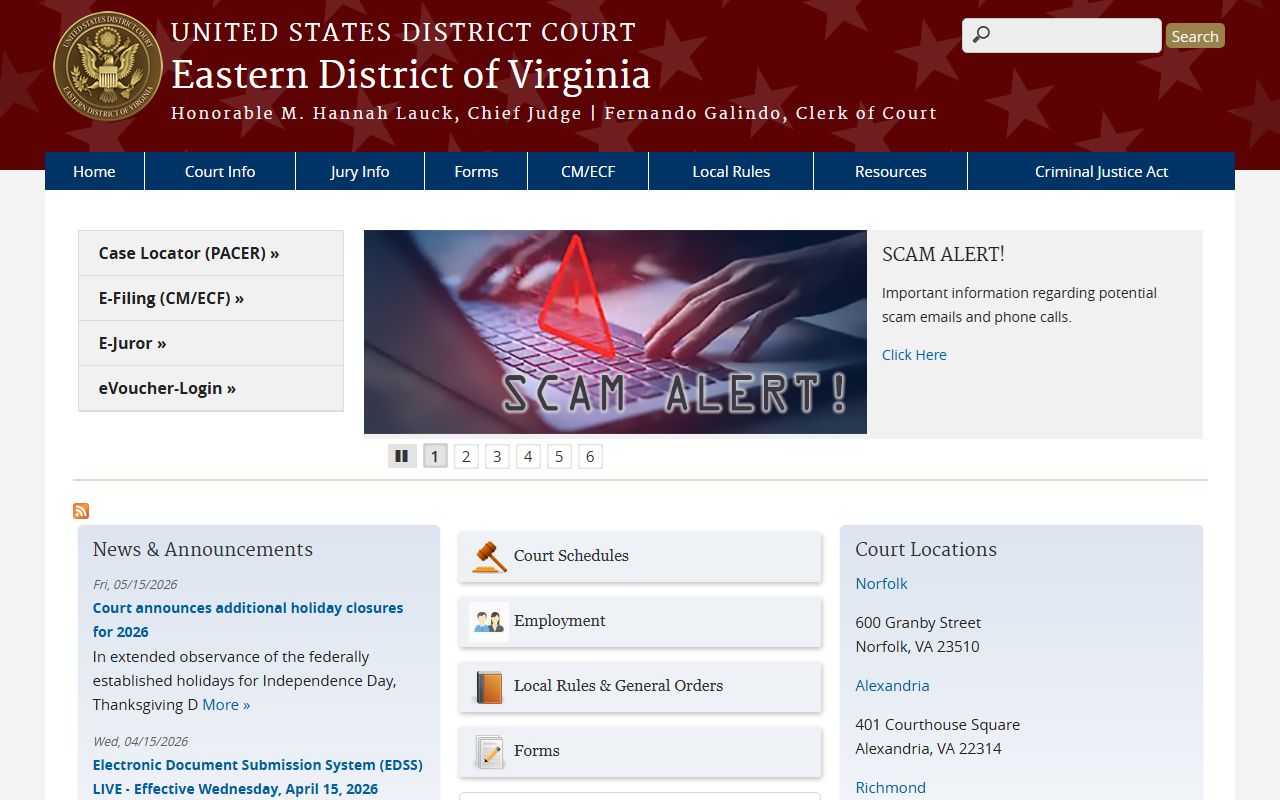
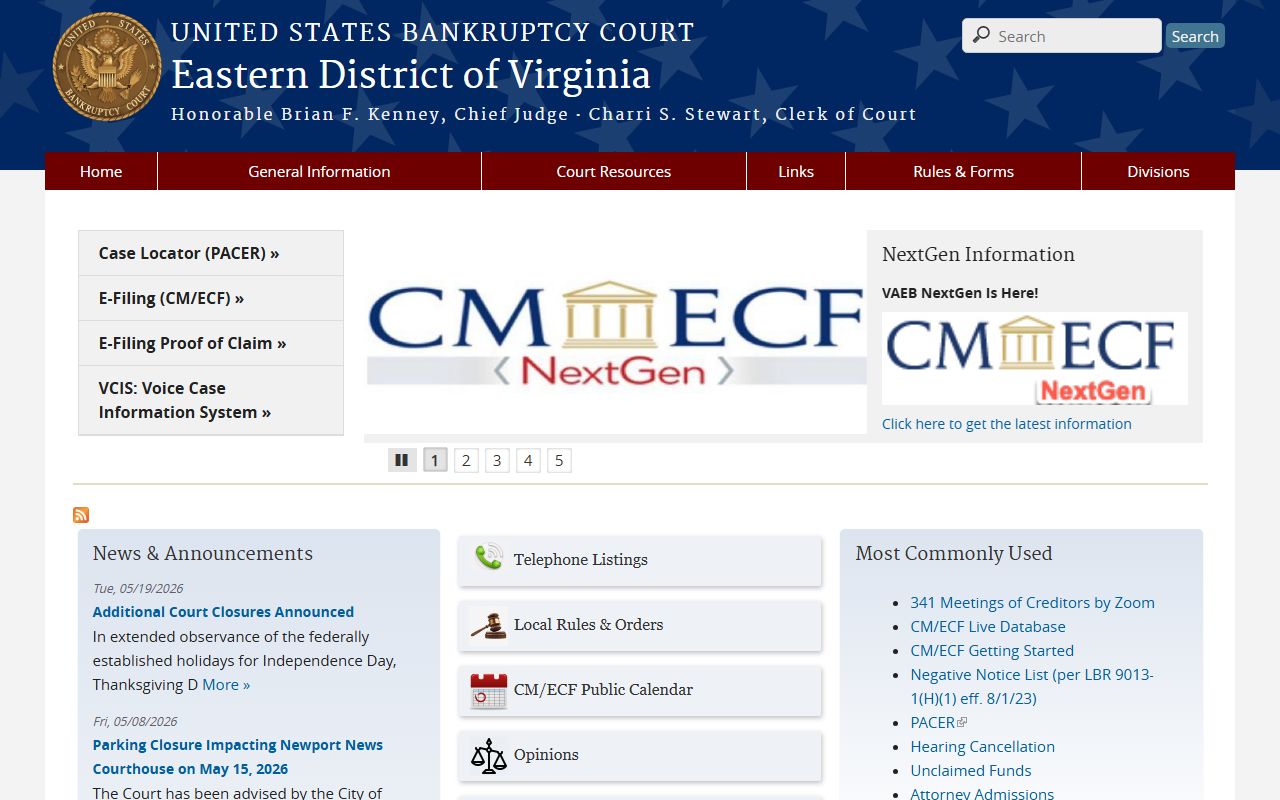
Some Loudoun cases are federal, not state. Federal civil suits and criminal prosecutions route to the U.S. District Court for the Eastern District of Virginia, often through the Alexandria division. Bankruptcy goes to a separate federal court. These courts keep their own dockets, apart from the state system.
The U.S. District Court for the Eastern District of Virginia hears federal civil and criminal cases from the county.
Federal bankruptcy filings from Loudoun go to the U.S. Bankruptcy Court for the Eastern District of Virginia instead.
Appeals from the district court climb to the U.S. Court of Appeals for the Fourth Circuit, the federal appellate court for Virginia.
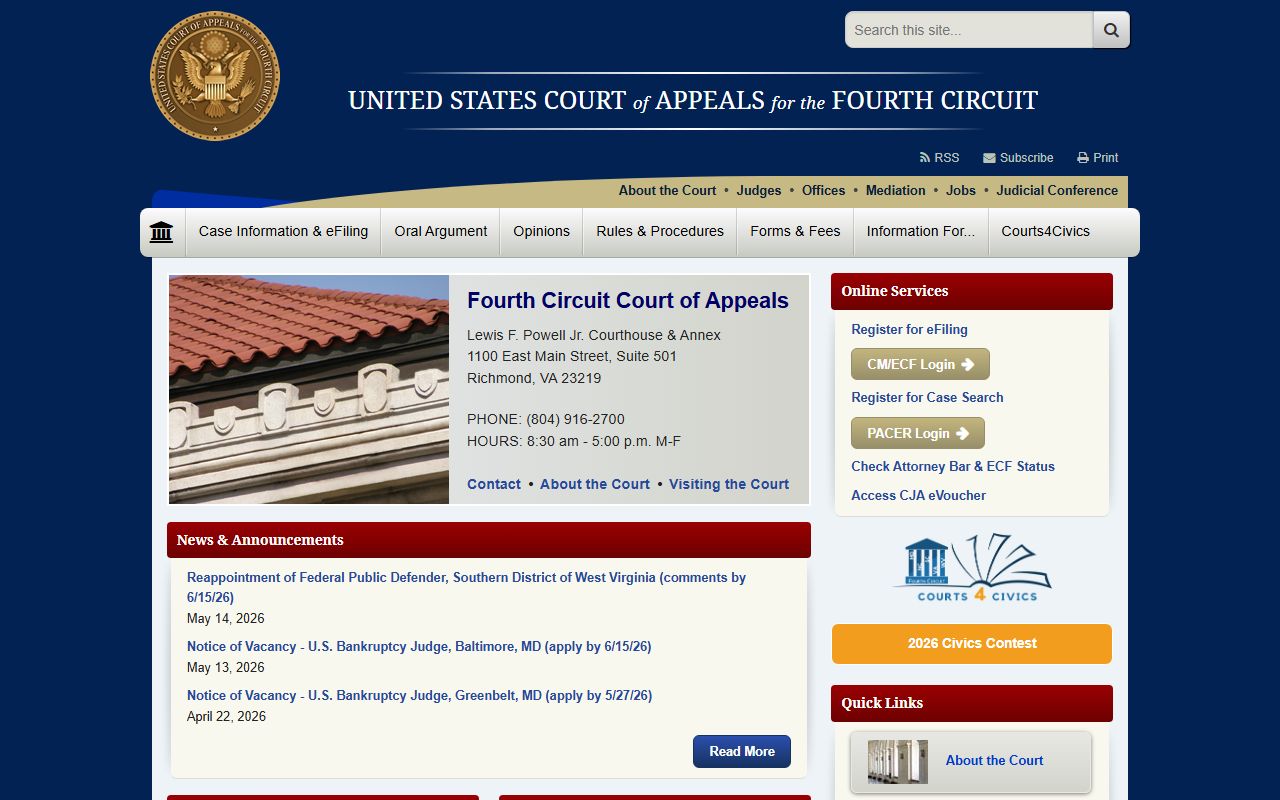
The Fourth Circuit reviews federal cases that started in the Eastern District, so a single matter can move through all three federal courts.
Accessing Federal Dockets Online
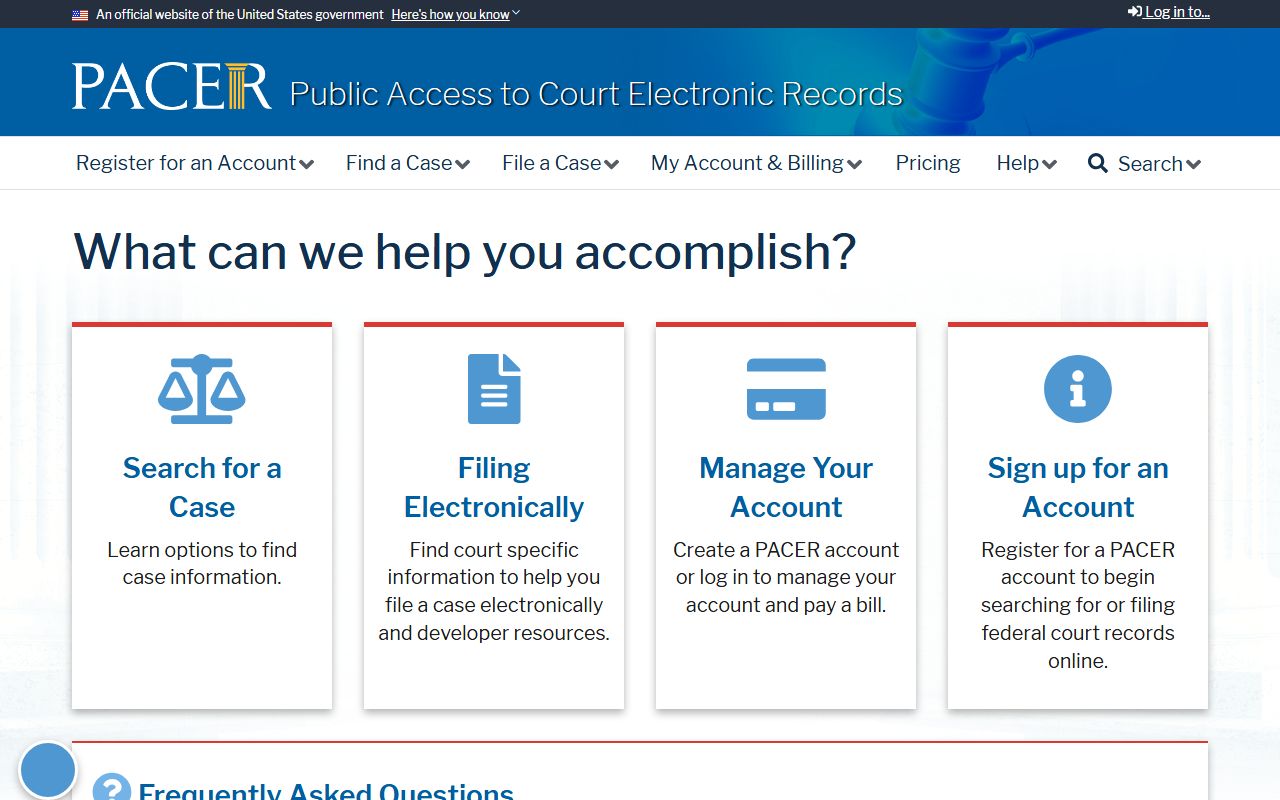
Federal dockets use a different access system than the free state portal. The official tool is PACER, which charges per page but offers fee waivers for some academic, nonprofit, and public-interest uses. You create an account, then search district, bankruptcy, and appellate dockets by name or case number.
PACER is the official electronic access system for federal court records.
For free access to many opinions and uploaded filings, CourtListener is a public alternative, though it is not the official docket source.
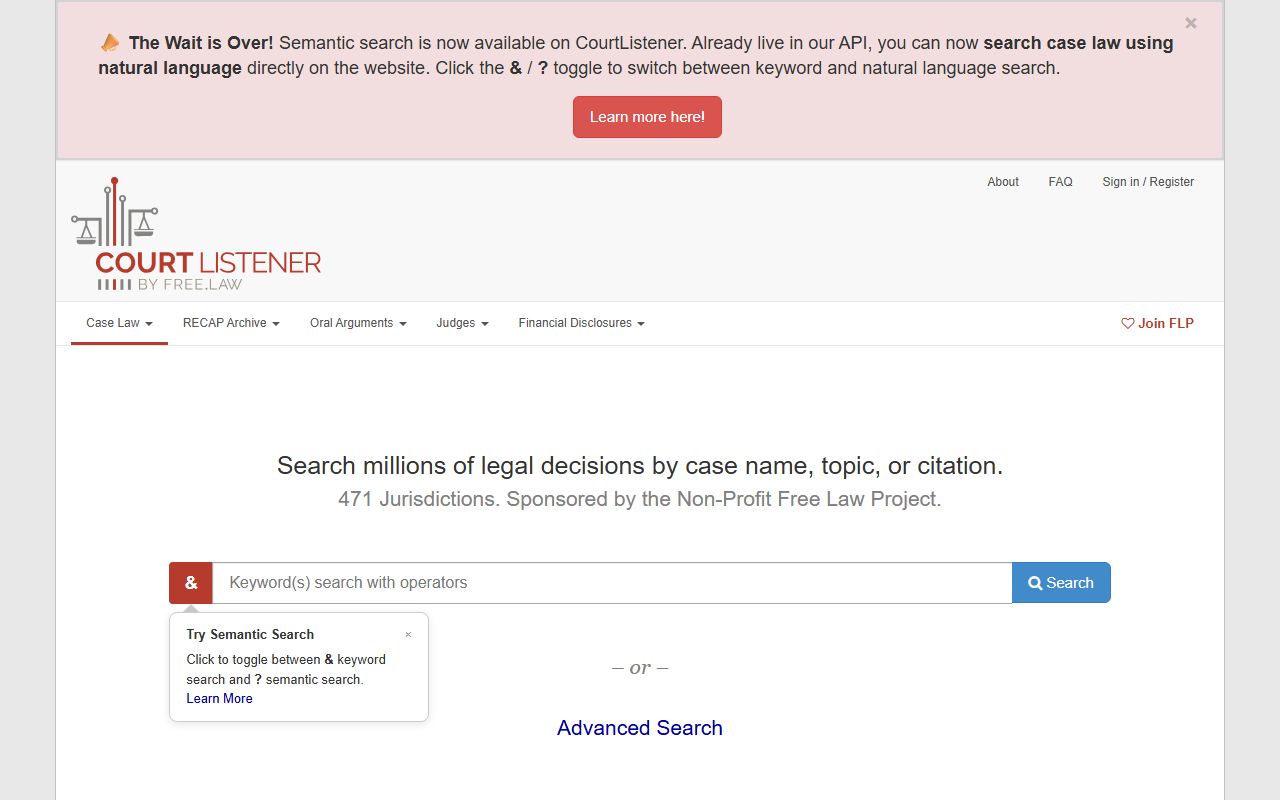
CourtListener can fill gaps when PACER fees are a barrier, but it may not hold every filing in a case.